Reviews of the Dungeon Crawler Carl Bonus Material – Matt Dinniman
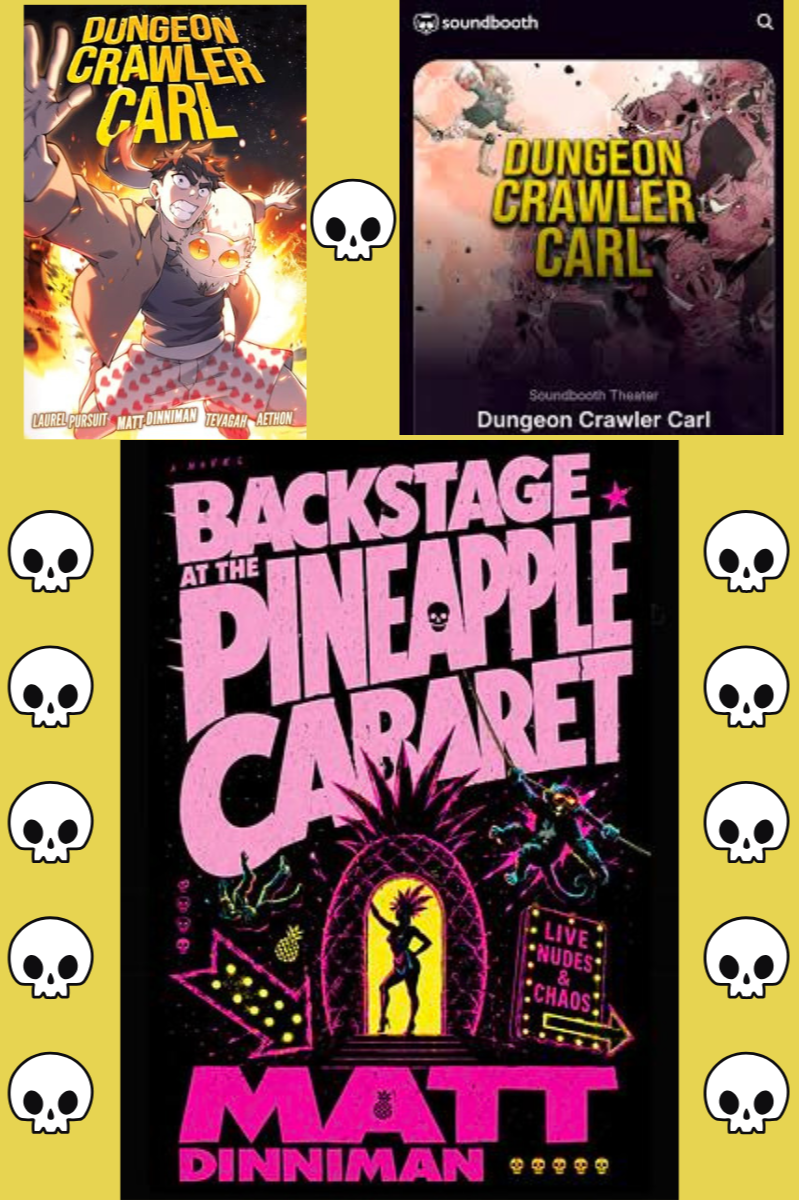
Eight books into "Dungeon Crawler Carl," I've come to think of the bonus material — the "Backstage at the Pineapple Cabaret" short stories included in the Ace hardcover editions, the audiobook extras from Soundbooth Theater and a recently released graphic novel — as the series' extended universe.
Some of it is essential, some of it is promotional but all of it rewards readers already committed to the dungeon with some new material while we await the Peacock series.
The audiobook extras range from genuinely funny additions to (very) thinly disguised ads for Soundbooth Theater. “Backstage at the Pineapple Cabaret,” however, turned out to be much more important than I initially realized.
In fact, I think I read it wrong.
I originally read each installment immediately after finishing its corresponding novel. By “The Gate of the Feral Gods,” I gave up. There was already so much happening in the main series that trying to remember an entirely separate cast and storyline felt like homework. So I stopped and decided I'd come back after finishing the series. That was absolutely the right decision.
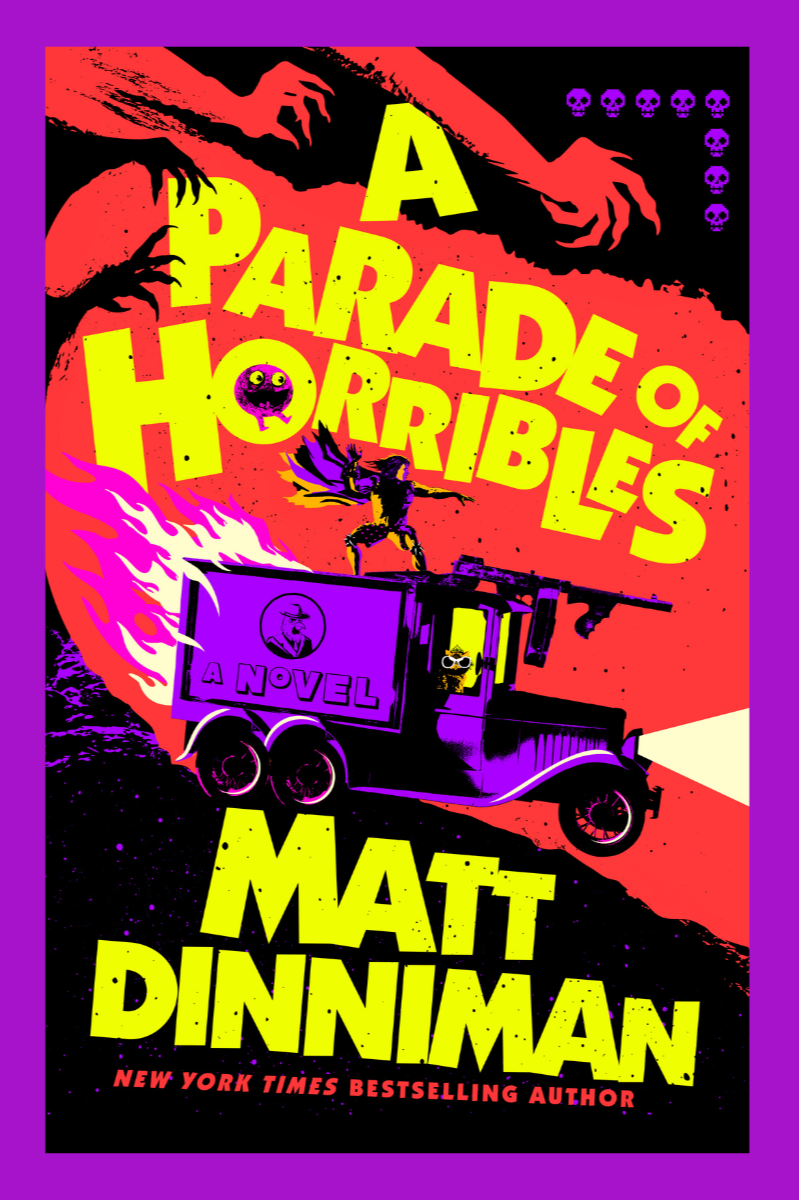
A giant spoiler warning from here on out. I'm discussing events through “A Parade of Horribles.”
Backstage at the Pineapple Cabaret
The biggest revelation in rereading “Backstage at the Pineapple Cabaret” is realizing just how much Dinniman was quietly setting up.
In “Horribles,” we finally learn what the Pineapple Cabaret actually is: a pocket dimension within the 17th floor, outside the Dungeon itself, where NPCs who become too sentient can supposedly retire. Akuma confirms its location to Carl in “This Inevitable Ruin,” and Carl hatches a plan to transfer as many crawlers there as possible.
Suddenly, these little bonus stories don't feel so little.
Each installment functions almost like a second epilogue, revisiting pieces of the floor you just finished while expanding the mythology of the Dungeon. Read individually, a lot of those details flew straight over my head. Read together after “Horribles,” the Easter eggs are everywhere. Characters, gods and locations that seemed like throwaway details become increasingly important to the main series.
That does raise a question I'm not sure I can answer yet: Why do we need all of this?
My assumption is that Dinniman is building toward something in the remaining books. If that's true, these stories could eventually become essential reading. For now, I'd call them fascinating but optional — and I'd strongly recommend waiting until you're caught up with the main series before reading them.
Part One: Rory
Rory's story remains one of my favorites, in part because it offers such an early glimpse of what “Dungeon Crawler Carl” will eventually become.
She's one of the goblin shamankas from the massacre in Book 1 and initially celebrates what she believes was a victory over the llamas. Slowly, however, she begins realizing that Princess Donut and Carl may have actually killed the other goblins.
More importantly, she's becoming sentient once she’s given a name by Donut.
When I first read this after, I was excited by the deeper characterization and broader world-building that weren't as visible in a novel still primarily focused on keeping Carl and Donut alive. Reading it again, there's an incredible amount of foreshadowing about the politics behind the Dungeon, cost-cutting and how mobs are treated on later floors.
If you're on the fence about continuing the series, this is actually the one bonus story I'd recommend reading immediately. It's a pretty good preview of where Dinniman is headed.
Part Two: Grandma Llama
The surviving mobs and creatures are essentially placed in storage until 10 are selected to become Dungeon Master Generals and tasked with creating the 17th floor. They'll populate it with monsters from previous floors, despite the fact that no crawler has ever made it past the 12th.
When they ask why they're building something nobody has ever reached, the answer is essentially: because that's how it's always been done. That's an extremely “Dungeon Crawler Carl” answer.
They're promised that success will eventually allow them to move into the Pineapple Cabaret, where they'll be safe and free from crawlers. Grandma Llama isn't convinced.
Neither was I.
Part Three: Growler Gary
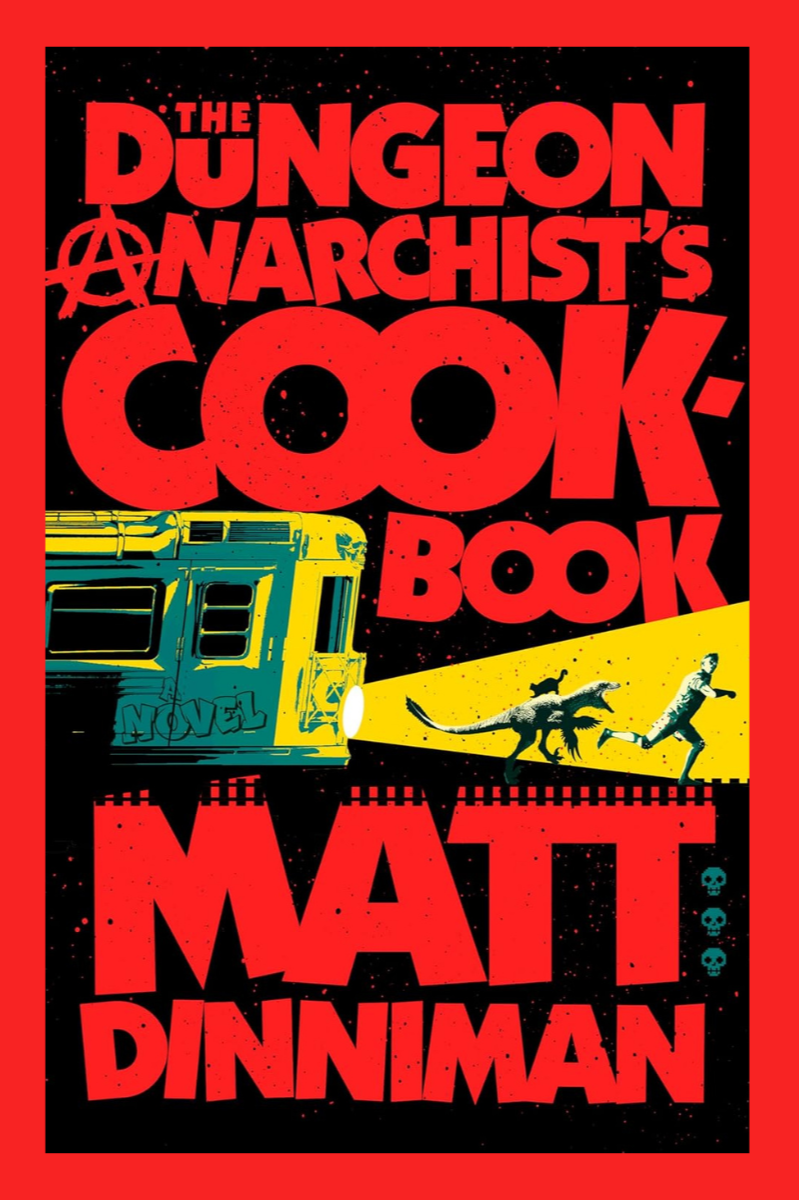
One of the more memorable characters from the main series (“The Dungeon Anarchist’s Cookbook”) gets some welcome additional time in the spotlight.
Growler Gary's immortality makes him valuable to both Grandma Llama, who believes the Cabaret is a lie, and Rory, who has become a true believer. Gary, meanwhile, is still detoxing from alcoholism, grieving Jen Jen and slowly realizing that what he's being told about his memories may be true.
Again, the plot is almost secondary to the details Dinniman is dropping around it. The floor is under construction, cleaner bots are being sold off and names like Herot and Menerva are becoming increasingly important.
Part Four: Cock-a-Doodle-Doo
Cock-a-Doodle-Doo, a human hamster born on Earth who is briefly part of an AI revenge-melee in “Gods,” gives us another perspective on the growing factions backstage.
Rory has essentially created a religion around the Cabaret. Grandma Llama wants to expose the truth. Growler Gary keeps trying to recreate Jen Jen. And Cock-a-Doodle-Doo, whose intelligence puts him on par with Donut and Prepotente, is trying to figure out everyone's angle.
By this point, the bonus story has evolved into its own miniature version of the Dungeon: competing factions, mythology, manipulation and characters becoming increasingly aware that the system around them isn't what they've been told it is.
Part Five: Willow Joy
This is where I originally tapped out.
I was incredibly confused the first time I read Willow Joy's story. Coming back after “Horribles,” it made a helluva lot more sense.
Willow Joy is a changeling working with Grandma Llama to uncover the truth about the Cabaret. Their plan involves having her impersonate Jen Jen to manipulate Growler Gary, which goes about as well as you’d expect.
But the more interesting material is her history on the 18th floor and Club Scolopendra. It adds some color to the Ascendancy Battles, deities and other pieces of Dungeon mythology that frequently left me lost in minute/is this important detail purgatory.
This is probably the best example of why I recommend waiting. Dinniman was giving us information that mattered; I just didn't have enough information yet to understand why it mattered.
Part Six: Jelly Bun
Jelly Bun, a drek adopted by Rory, begins recognizing just how badly things have deteriorated. Unable to speak but highly perceptive, Jelly Bun recognizes that roughly 30 of the 150 NPCs have become shadow mimics. The key revelation: the Pineapple Cabaret is where the old gods live, which explains how they move between floors and worlds so easily. Short and strange but significant.
Part Seven: Larry
By Larry's installment, things are going completely to hell. A rat-kin who trained NPCs before becoming a shadow mimic. We learn the mimics are all connected to a single Prime who has ordered them to stop eating others. As NPCs from the 18th floor flood in trying to regenerate, Larry's hunger wins out. This introduces Epitome Noflex, whose connection to Epitome Tagg and the Dream gives the story a much stronger link to “Ruin.”
Meanwhile Menerva is worried that the system AI will discover what's actually happening, and heads into the Cabaret looking for Herot.
Part Eight: Nigel
A Mind Horror psychologist who survived the shadow mimic attack by hiding in his own maze. The survivors — Grandma Llama, Growler Gary, the hamster siblings searching for Cock-a-Doodle-Do and a handful of goblins — learn the truth: Menerva trained NPCs to enter the Cabaret and rescue Herot, but all attempts failed. She's now inside, but the shadow mimics from the 18th floor are coming back. An extraction team is heading in for Rory so they can turn the Cabaret into a stronghold.
We're very close to the events Carl is beginning to uncover in the main series. Justice Light, Menerva, Herot, Epitome Noflex — names and connections scattered throughout these stories eventually intersect with characters and events in the novels. Justice Light and Herot in particular connect the Cabaret directly to the Dungeon Anarchist Cookbook and its previous authors.
Audiobook Extras (Soundbooth Theater)
Most of these are elaborate advertisements for Soundbooth Theater with a “Dungeon Crawler Carl” skit attached. Some are funny, but I wouldn't purchase the audiobooks specifically to hear them.
I also learned very quickly that the full Soundbooth Theater experience probably isn't for me. There's already so much happening in these books that adding additional voices, effects and audio immersion makes it harder for me to follow rather than easier.
Still, there are some gems.
Book One: Straight ad for Soundbooth Theater. Skip.
Book Two: Mostly an ad, but opens with a funny bit about toymakers trying to perfect Princess Donut's voice for the Veriluxx RealPet Companions line. Worth the first two minutes.
Book Three: This is the first one that felt worth my time. Princess Donut participates in an “Earth Beautiful” episode while Carl refuses the beauty-pageant portion. We get Prepotente, Carl complaining about audiobook costs and negative reviews and Donut discussing cocker spaniels. Essentially, Dinniman gets sassy. Listen to the first four minutes and you'll get the good stuff.
Book Four: Another amusing concept: an advertisement for Dungeon Crawl World Earth, a fantasy camp where visitors can spend a week hunting and killing people before relaxing in a recreation of Club Scolopendra. It's “100 percent safe,” which obviously means everything is not fine. Again, the first four minutes are worth hearing before it turns into a sales pitch.
Book Five: A standout. Donut does a vocal session practicing spell-casting across genres — classic hip hop, country, Norwegian death metal (she sings about Mongo, naturally), and mid-90s emo rock where she performs her own lyrics over "Wonderwall," her favorite song, titled "Wondercrawl." The Soundbooth pitch is also the least grating here.
Book Six: Two Donut Hole members complain about the "elitist bitches" of the Princess Posse while discussing upcoming Donut merch. Makes some funny digs at mispronunciations of places in Washington and Spanish. The audio-immersion tunnel segment is actually better than Jeff Hays.
Book Seven: Set at Squirty's Waystation just outside Earth's tunnel access. An employee named Xander can't unload his Veriluxx Real Pet Companion inventory and has a conversation with the Uzi Jesus toy. Eris, goddess of chaos, stops in and she snaps off his tentacles. Then a storyteller tries to entertain immortal children who can't agree on a story, eventually settling on how Harpocrates "lost his dick," told from the POV of Thumbtack the Pharmacist from the Cosmic Lounge. It was genuinely funny, and adds some color to events in the book.
Book Eight: The best audiobook extra in the series. Prepotente accidentally agrees to a 37-cycle indentured servitude with the Harry T Ventures corporation while karaoking. His escape: if he writes new lyrics to a song and gets enough streams, the royalties cancel the contract. He rewrites "In the Air Tonight" as "Oh, Carl" — a surprisingly moving perspective on his evolving relationship with Carl. It's actually kind of a bop.
Overall recommendation: Books Five and Eight are worth seeking out. The others range from mildly amusing to skip entirely.
The Graphic Novel, Volume One
Adapted by Tevagah and illustrated by Laurel Pursuit Studios, the first volume is essentially the Cliff's Notes version of the first third of the first novel. And I really do mean Cliff's Notes: 320-pages only gets us to roughly the 140-page mark of the original book, ending around the goblin massacre. (How many of these graphic novels are there going to be?)
The biggest thing missing is Carl's interiority. We get the major plot points, characters and jokes, but very little of what is happening inside Carl's head. That inevitably makes the story feel thinner, particularly knowing how much Dinniman eventually builds upon Carl's perspective.
Visually, it's also not quite how I imagined this world. The artwork leans more heavily into anime than I expected, making Carl look younger than he does in my head and Donut not particularly reminiscent of a Persian cat. The Dungeon itself was surprising, too. I've always pictured more cave walls, while this version has tile, lights and columns.
Those are largely matters of personal preference. My bigger complaint is the physical quality of the book. The text inside many of the notification boxes is genuinely difficult to read, which appeared to be a problem with the paper and printing. For a series where notifications and boxes are such an important part of the storytelling, that's a pretty significant flaw.
Still, it's a really easy way to remember where all of this started. I'd forgotten what Carl and Donut were like before they were ridiculously leveled up and surrounded by an enormous cast of characters. Seeing them struggle with novice skills again was almost quaint. I'd also forgotten the emotional toll that killing the Hoarder took on them.
More than anything, revisiting these early events put Dinniman's character development into perspective. The evolution of Carl and Donut hasn't always been obvious while moving through thousands of pages of increasingly complicated Dungeon mechanics, but putting these early versions of the characters next to who they are in “Horribles” makes that arc much easier to see.
That's probably how I'd use these graphic novels going forward: as refreshers. If future volumes continue condensing the novels this aggressively, I could see flipping through one to remind myself of the major events without rereading an entire book, but they're certainly not replacements for the novels.
Overall, the first volume feels rushed, and the poor print quality makes an already condensed adaptation harder to enjoy. Volume Two arrives in October, and I may keep reading as the series progresses, but I won't be purchasing them anymore.
So, What's Actually Worth Your Time?
If you're as deep into “Dungeon Crawler Carl” as I am, “Backstage at the Pineapple Cabaret” is worth reading. Finish the main series first and then go back. You'll understand considerably more of what Dinniman is doing, and details that initially look like random additions to an already overstuffed universe suddenly start connecting to the larger story.
The audiobook extras are easier to rank. “Wondercrawl” from Book 5 and “Oh, Carl” from Book 8 are the only two I'd call must-listens. Books 3 and 4 have funny opening sections, while the rest are primarily for completionists who don't mind sitting through Soundbooth Theater advertising.
The graphic novel is the opposite of “Pineapple Cabaret”: instead of adding to the story, it strips it down. I wouldn't recommend it as an introduction to “Dungeon Crawler Carl,” but as a quick refresher on where these characters started it works.
If nothing else, working through all this supplemental material reinforced that Dinniman is playing a very long game. I haven't always loved it, and there have been many moments when the mythology, factions, gods and rules became too much for me to track.
But underneath all of that machinery are characters slowly realizing the true nature of the system controlling their lives — and deciding what they're going to do about it. Carl and Donut aren't the only ones waking up.
Apparently, we should have been paying attention backstage, too.
Pineapple Cabaret Stories Rating: 4/5 stars overall
Audiobook Extras Rating: 2.5/5 stars overall — with Books Five and Eight rating considerably higher
Graphic Novel Volume One Rating: 3/5 stars
Formats: Hybrid (hardcover, audiobook, paperback)