2025: The Best and Worst Audiobooks I Heard
With a few notable exceptions (“Lonesome Dove,” I’m looking at you), my favorite and least favorite audiobooks tend to overlap neatly with the books themselves.
With audiobooks making up nearly 80% of my reading this year, what I observed is that great audiobook narration isn’t about performance, range or theatrics – it’s about restraint.
The narrators who landed on my best-of list trust the material, understand tone and know when to disappear. The ones who showed up on the worst list overact, exaggerate voices or provide unnecessary accents – all choices that pull attention away from the story instead of into it.
Once again, there’s a familiar class of all-stars – voices I’ll follow almost anywhere – and a growing group of repeat disappointments who remind me just how fragile the listening experience can be.
When audiobook narration works, it becomes the definitive way to experience a story. When it doesn’t, no amount of goodwill or strong writing can save it.
Overall Best Narration
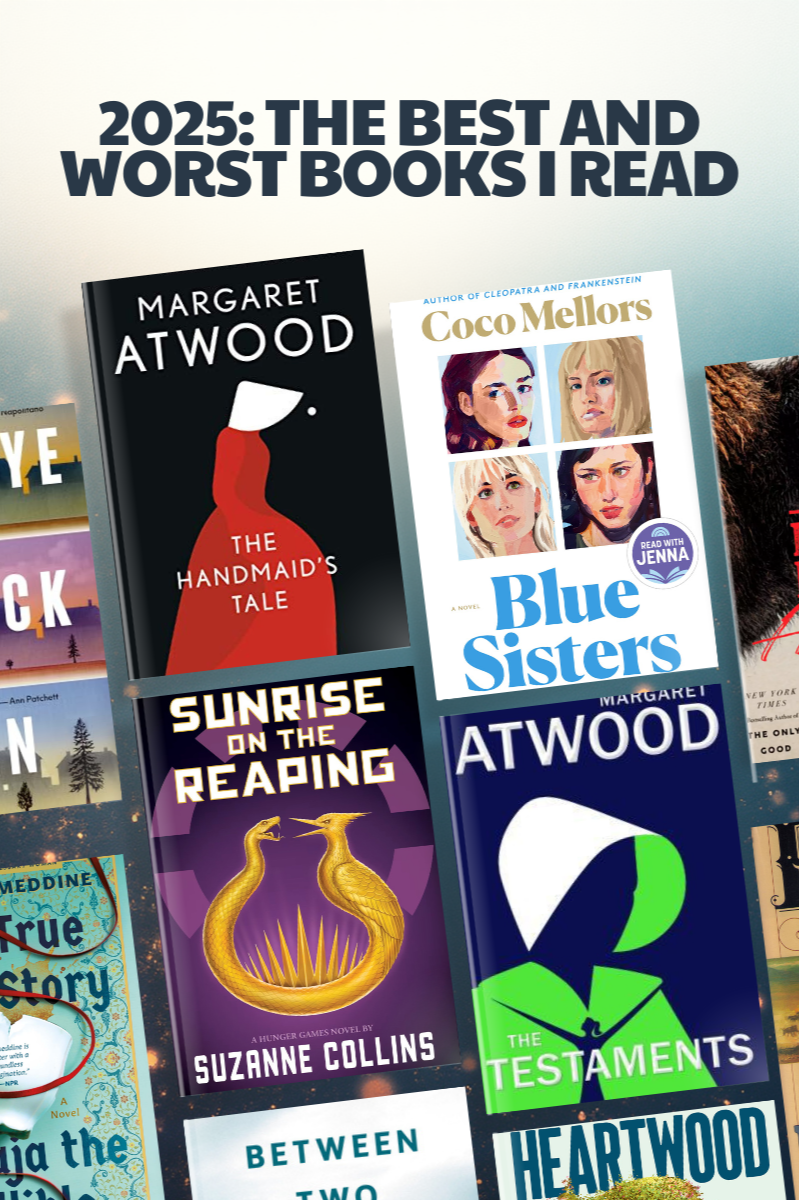
Ann Dowd, Bryce Dallas Howard and Mae Whitman in The Testaments by Margaret Atwood (2019)
While Atwood’s novel is compelling on its own, the audiobook transforms it into something sharper, colder and far more immersive. With a cast of well-regarded performers – and Dowd already closely associated with Gilead – the production knows exactly what it’s doing and never wastes that advantage.
What makes it stand out is the discipline of the performances. Each narrator brings a distinct voice and point of view, but none of them overplay the material. The result is an audiobook that feels controlled and immersive rather than theatrical. Aunt Lydia’s sections, in particular, benefit from a delivery by someone who deeply understands the character.
Runners-up: Kit Griffiths in “Blue Sisters” (2024) and Justine Lupe, Alma Cuervo, Rebecca Lowman, Ali Andre Ali, Cary Hite and Helen Laser in “Heartwood” (2025)
The Best of the Rest
Vikas Adam in Tell Me How to Be by Neel Patel
While the novel was frequently overwrought, Adam delivers one of the strongest solo performances I heard this year. His vocal range and character differentiation are so precise I initially assumed there were multiple narrators. His performance likely kept me from bailing on the novel early.
Kit Griffiths in Blue Sisters by Coco Mellors
While the narration initially took some adjustment, especially Lucky’s voice, once Griffiths gets settled, each sister feels real. Distinct character voices, strong pacing and a willingness to sit with discomfort deepen the emotional impact, allowing grief and addiction to land without added melodrama or easy catharsis.
Roger L. Jackson in Your Favorite Scary Movie: How the Scream Films Rewrote the Rules of Horror by Ashley Cullins
Having Ghostface himself narrate this book is both obvious and smart. Jackson’s delivery balances enthusiasm with structure, keeping the tone playful but focused. It’s a meta-aware performance that understands the fandom it’s speaking to, making this a genuinely fun and engaging listen.
January LaVoy in Lula Dean’s Little Library of Banned Books by Kirsten Miller
No one leans into satire without tipping into caricature better than LaVoy. Her performance keeps the tone brisk and pointed, sharpening the humor while maintaining narrative control. The result is an audiobook that lets the book’s political bite land.
Justine Lupe, Alma Cuervo, Rebecca Lowman, Ali Andre Ali, Cary Hite and Helen Laser in Heartwood by Amity Gaige
While not the most flawless book I read this year, it’s easily one of the most gripping, largely because of the audiobook. A who’s who of audiobook all-stars brings real depth to the story, with each performance fully inhabiting its role.
Jessie Mueller in Never Flinch by Stephen King
I was initially disappointed to see Justine Lupe wasn’t returning after “Holly,” but Mueller more than won me over. Her performance is confident, giving each character a distinct voice and sustaining momentum through the book’s most indulgent stretches.
David and Amy Sedaris in Naked and Barrel Fever by David Sedaris
Their sibling chemistry sharpens the timing, adds warmth and makes the humor feel spontaneous rather than scripted. Amy’s unexpected appearances, in particular, elevate familiar material and deliver genuine laugh-out-loud moments.
Bahni Turpin in If Beale Street Could Talk by James Baldwin
Turpin understands Baldwin’s prose instinctively. She allows the lyricism to breathe without turning it precious, preserving the balance between tenderness and fury. It’s a performance that knows when to step forward and when to step back.
Jefferson White in Sunrise on the Reaping by Suzanne Collins
While the story itself does much of the work, White’s performance keeps the experience relentless. He handles the material with both acceptance and resolve, allowing exhaustion, brutality and dread to accumulate organically.
The Worst Narrations
Orlagh Cassidy in The Bees by Laline Paull
Leaning hard into theatricality, Cassidy’s narration quickly becomes part of the problem. Her exaggerated class-based voices – posh, gruff and oddly camp – draw attention to the book’s already unstable tone rather than grounding it.
Kevin Chen in Tales from the Cafe and Before You're Memory Fades by Toshikazu Kawaguchi
Chen’s overly animated energy clashes with the books’ intended quiet melancholy, flattening all nuance. Exaggerated character voices become distracting, and in “Before” his decision to give a central character a Southern U.S. accent is especially baffling.
Santino Fantina in Middle of the Night by Riley Sager
Probably my least favorite narration of the year, it’s aggressively overacted, with nearly every character voice exaggerated to the point of parody. Awkward pauses and hammy line readings drain tension from scenes that should feel ominous, making already clunky dialogue sound worse. This book is done dirty by Fantina.
Alexandra Grey in Bad Habit by Alana S. Portero
Here, restraint hurts more than it helps. Grey’s flat, even delivery struggles to match the emotional texture of Portero’s prose, smoothing over moments that need more weight, tenderness or urgency.
Daniel Henning in Somewhere Beyond the Sea by TJ Klune
Henning reprises his role with the same heightened, theatrical style as the first book, but what once felt novel now quickly becomes grating. His exaggerated adult character voices and distracting pronunciation choices repeatedly pull focus from the story, flattening emotional beats that need subtlety. While his performances of the children retain some charm, they aren’t enough to balance a narration that feels overworked.
Lee Horsley in Lonesome Dove by Larry McMurtry
While the book has been re-recorded with Will Patton (not sure that’s a good thing), this version is largely held back by dated production. Horsley’s performance sounds congested and oddly stitched together, and his gravelly, Tommy Lee Jones imitation-style voice choice for Gus is distracting. Plus, the chipper chapter announcements repeatedly break the novel’s carefully built atmosphere.
Naruto Komatsu and Natsumi Kuroda in We'll Prescribe You a Cat by Syou Ishida
The narration swings unpredictably between manic whimsy and somber restraint, never quite settling on what’s best for the material. Instead of reinforcing the book’s cozy, magical premise, the inconsistent performances highlight its repetition and diminishing returns.
Will Patton in If It Bleeds by Stephen King
This collection shows the duality of Patton. He’s at his best in “Mr. Harrigan’s Phone,” delivering a restrained, intimate performance that plays to his strengths, but in the title novella his choices become distracting, with an odd, Trump-like cadence that undercuts tension. He frequently distracted from the source material, which is a cardinal sin in audiobook narration – especially when that source is King.
Erin Tripp in Everyone Dies Famous in a Small Town by Bonnie Sue Hitchcock
The narration could’ve helped stabilize an already uneven collection, but Tripp felt removed from the characters, never nailing the emotional heft needed. Compounding the issue was sloppy production, including missing chapter breaks and jumbled transitions, that made the structure harder to follow than it needs to be.