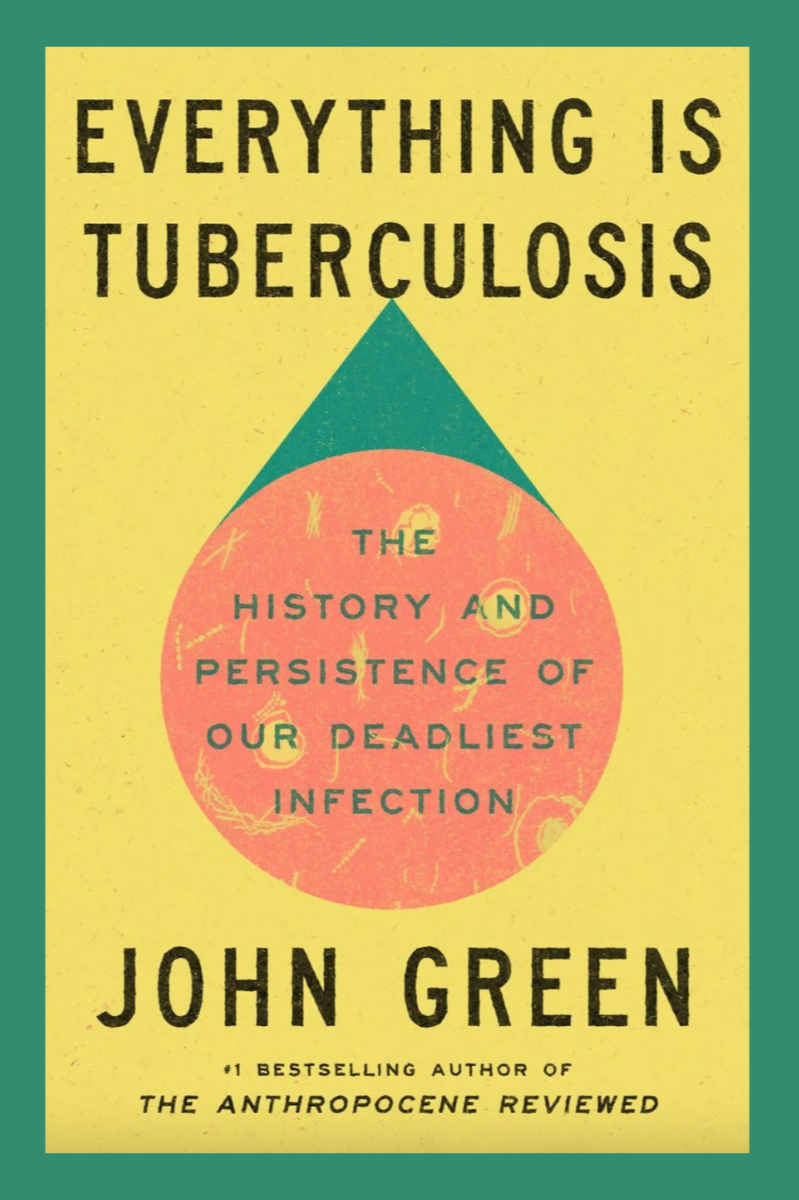
Everything Is Tuberculosis: The History and Persistence of Our Deadliest Infection – John Green
I’m almost embarrassed to admit this was my first John Green book. Within a few pages, I was already kicking myself for waiting so long.
The author writes with a quick, wry accessibility that never feels condescending. He moves easily between the granular and the global — from the stubborn optimism of a 17-year-old boy in Sierra Leone to the sprawling socio-political systems that have allowed tuberculosis to persist for millennia. It’s pop-science in the best sense: approachable without being fluffy, informed without being academic and compulsively readable.
At the heart of the book is Henry Reider, a teenager Green met at Lakka Government Hospital who simply wants to be healthy. Through Henry and his mother, tuberculosis becomes human, not an abstraction or distant myth many in Western countries barely think about.
Their story threads through discussions of colonialism, global health funding, drug resistance and the maddening reality that a curable disease still kills over a million people each year. The human throughline keeps the broader history from drifting into lecture mode.
I’ve read similar-ish microhistories before — “The Beast in the Garden,” “The Mosquito: A Human History of Our Deadliest Predator” and “The Death and Life of the Great Lakes” — but I’ve largely avoided disease narratives. My baseline hypochondria plus living through COVID-19 felt like enough epidemiology for a lifetime.
Green, thankfully, avoids sensationalism. Instead, he explores how tuberculosis has shaped culture in ways both strange and unsettling: the romanticization of the “consumptive” artist; the waifish, hollow-cheeked beauty standard that lingers today; the way fresh-air cures influenced everything from the American West (and Stetson hats) to New Mexico’s path to statehood; even the fact that several of the assassins of Archduke Franz Ferdinand were consumptives.
One of the more startling details was that tuberculosis holds the Guinness World Record as the deadliest infectious disease in human history (there really is a category for everything). But Green uses that trivia as a way to underscore a larger point: diseases are never just biological, they are political.
Reading this alongside “Stamped from the Beginning” drove home that point. I foolishly hadn’t fully considered disease as a system of injustice, but it absolutely is. Who gets sick, who gets treated and who is written off as collateral damage — these are choices. Our responses to tuberculosis, HIV, malaria, Ebola and COVID-19 say as much about our human hierarchies as they do about our science.
That said, even at under 200-pages, it occasionally felt longer than it needed to be. Some of the deeper historical sections dragged, especially when the narrative moved away from Henry and into more abstract history. I found myself most engaged when Green leaned into the anthropological and human rather than the historical.
The audiobook, narrated by the author, was solid. His enthusiasm and empathy come through clearly, but he wasn’t preachy. You can hear why Henry matters to him and his family.
This isn’t a comprehensive medical history of tuberculosis, nor does it pretend to be. It is, in essence, a moral argument. I was fascinated throughout — and still, by the end, I was ready for it to be done.
Rating (story): 4/5 stars
Rating (narration): 3/5 stars
Format: Audiobook (library loan)
Dates read: February 17 – February 21, 2026
Multi-tasking: Good to go. Between the author’s steady narration and the clarity of his writing, even the denser, science-heavy sections are easy to follow — no matter what else you’re doing while listening.