The Eye of the Bedlam Bride – Matt Dinniman
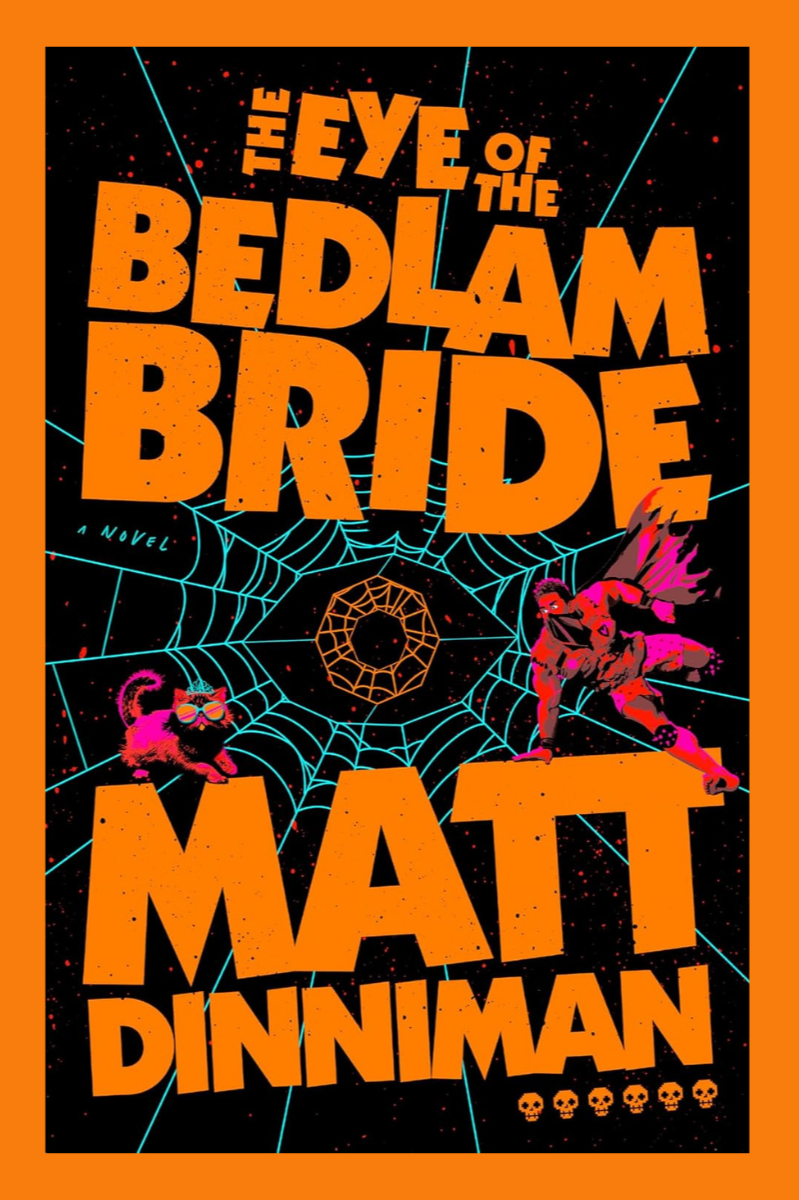
After "The Butcher's Masquerade" earned the series its first five-star review from me, "The Eye of the Bedlam Bride" was always going to face a tough comparison. It doesn't quite clear the bar, but the parts that work, work in ways that have kept me genuinely invested through six books.
Matt Dinniman opens, as he often does now, with a recap of the previous floors — a small structural courtesy that's become genuinely useful given how much plot this series accumulates. A prologue then finally fills in the history between Odette, Chaco and Mordecai that's been hinted at for books: Chaco killing Mordecai's brother at Odette's recommendation so the group could reach the 12th floor and earn Odette's freedom. It's a strong opening that promises momentum the book doesn't fully sustain.
The first 50 or so pages settle back into old patterns — opening boxes, working out floor mechanics, regrouping in chat. It's a little disappointing to see Dinniman fall back on the setup-heavy storytelling he's mostly moved past in recent installments. Longtime readers know these details often pay off later, but getting there can feel like homework.
The Puerto Rico-set floor, titled "Ghosts of Earth," introduces three new human crawlers, including Sister Ines, a cat-class nun who turns out to have killed her entire convent and whose class ability — a toxoplasmosis-adjacent effect that makes people follow her without remembering why — is exactly the kind of deranged specificity this series does best.
I'll admit I struggled with this one for about two months as a physical read before finally giving in and supplementing with the audiobook to push through. For the record: I'm still buying the physical copies from my indie bookstore in protest of Amazon, even while listening on Audible — a small, somewhat contradictory act of resistance that Carl himself would probably appreciate.
Jeff Hays' narration is, for me, a mixed bag. He's clearly talented — the sheer number of distinct voices he pulls off, human, creature and computer alike, is genuinely impressive — but some of his character choices are baffling. Why does Donut have a British accent when she's a Persian cat from Seattle? Why does Mordecai sound like a drunk Southerner?
After five books of creating these character voices in my own head first, his interpretations frequently don't match up. Samantha is the one character whose voice I love, which is funny, because she's a character I didn't really care for until this novel. His Alpha Carl also had me laughing out loud.
The first third is rough going regardless of format — heavy on totem and card game rules that I found tedious until the actual fighting starts. Things pick up considerably around the halfway point, when Katia's overdose and detox storyline collides with the mission to kill Astrid, the manager of the Desperado Club, cracking open more layers about the sentient NPCs and indentured servitude that propel us toward the Faction Wars.
[spoilers ahead]
The back half is where the book justifies its length. Carl's "I'm not really in Iowa, but I am" sojourn — discovering that his stepmother gave his father an overdose to kill him faster, and that he has a half-brother he never knew about who's being victimized in the same ways Carl was — brought me closer to tears than anything else in the series so far.
The detail that the floor literalizes Dallas County, Iowa specifically (Donut, naturally, insists it's Idaho) is delightful and unexpected for this Midwesterner. Someone needs to make Raygun produce a "Gobble, gobble, bitches. Welcome to Iowa!" shirt immediately. I've already adopted it as my new catchphrase.
Ren's death is the other gut-punch — willingly killing herself rather than fighting Carl, because she recognizes he's necessary to the resistance that's forming. It's the kind of quiet moment this series keeps finding room for amid all the carnage, and it's exactly why I'm still reading.
The political machinery around the Faction Wars, and the introduction of Agatha and the Residuals as an offshoot of the Pacifist Network actively trying to end everything, is a lot, but I recognize it as essential setup. Still, I occasionally lost the thread of which minor god is fighting whom and why, and the plot got overcomplicated in ways that recall The Iron Tangle.
[spoilers ended]
Six books into "Dungeon Crawler Carl," I've realized I'm reading these novels for very different reasons than many of the series' most passionate fans. Yes, the dungeon mechanics are clever. Yes, the jokes can be funny. Yes, Dinniman continues to build an impressively elaborate world. But the reason I keep coming back is much simpler: Carl and Donut.
Donut remains the best part of this series, full stop, even filtered through a narration choice I don't love. The way her recurring "Mongo doesn't like…" deflections reveal her own insecurity is what makes her work — for all her confidence and celebrity, she's still desperate to be loved and valued.
Her conversations with Carl remain the best scenes in every book because they remind us what all the explosions, gods and chaos are actually protecting. She has one of the greatest character arcs I've ever read (yes, seriously).
The second half is considerably better paced than the first, and the epilogue sets up genuinely ominous stakes for book seven: the AI going fully bonkers, system leaders who can now die in the Faction Wars and former crawlers and Cookbook authors returning for revenge.
The unmistakable shape of something like nuclear holocaust is on the horizon — it's just a matter of who's in front of the button when the time comes. For the first time, the people running this cosmic spectacle may be forced to experience the consequences of the game they've created.
Beneath all the absurdity, violence and humor is a story about people choosing one another over systems designed to divide them. The message isn't subtle, but it's effective: we are stronger together than apart.
One final note on the audiobook: Patrick Warburton's brief turn as Carl's father is excellent, and Travis Baldree brings real manic energy to an otherwise pointless bonus skit.
Rating (story): 3.5/5 stars
Rating (narration): 3/5 stars
Format: Hybrid read/listen (personal library)
Dates read: April 19 – June 15, 2026
Multi-tasking: Okay. The audiobook keeps things moving much faster than the physical copy, but there is so much detail in these novels, and you don’t want to miss something that could be crucial later. For that reason, still make sure you’re paying attention.