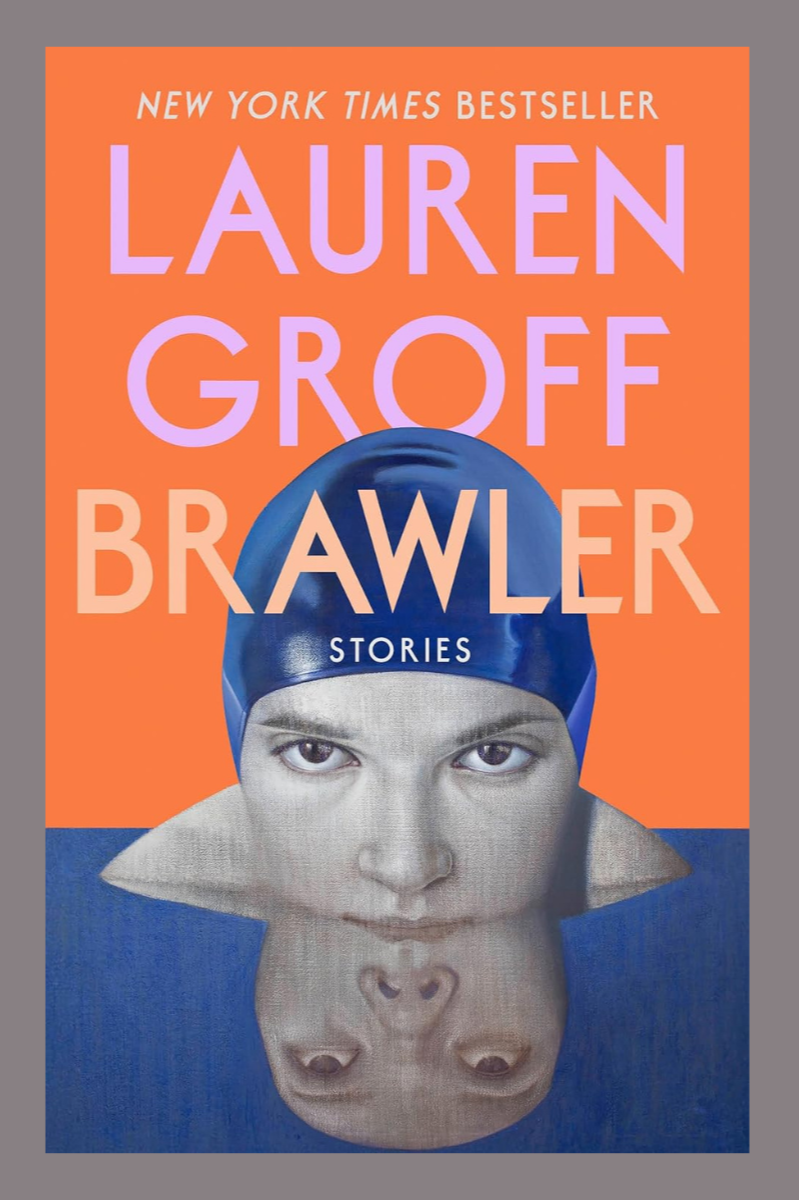
Brawler – Lauren Groff
Lauren Groff's "Brawler" feels less like a traditional short story collection than a series of abandoned novels, which may sound like a backhanded compliment, but it's a genuine one. The strongest stories don't end so much as they stop, leaving behind characters and worlds that feel large enough to sustain another 300-pages. I frequently wished Groff had kept going.
Across nine stories, (mostly) women grapple with family, usefulness, expectation and trauma. Some dilemmas are intimate — a retiree wondering who she is without a purpose, a woman trying to honor a painful family history — while others are far more dramatic, involving stalking, addiction, jealousy and unimaginable loss.
Yet the questions Groff raises remain remarkably consistent: How much of our past do we carry? What do we owe the people we love? Who are we when the roles we've built our identities around disappear?
The collection is strongest in its longer sections. "The Wind" uses its title's persistent force as a metaphor for generational trauma, tracing how abuse echoes through women who never directly experienced it. "Birdie" gathers middle and high school girlfriends at a deathbed, and old wounds naturally get reopened. "To Sunland" follows a recently orphaned brother and sister on a road trip toward separate futures (and it broke my heart).
"What's the Time, Mr. Wolf?" — which takes up roughly a third of the book and reads more like a novella — is the standout. What begins as a "Succession"-meets-"The Bear" family drama about a banking dynasty slowly morphs into a story about obsession. Once it settles on Chip as its center, it's genuinely captivating.
The shorter stories are more uneven. Some, including the title story "Brawler," felt like intriguing sketches. Others, particularly "Under the Wave" and "Such Small Islands," lean into darker, almost thriller-like territory that makes them feel somewhat disconnected from the rest of the book.
My biggest disappointment wasn't the writing but the audiobook. The author narrates the collection herself, and while it's always interesting to hear an author read their own work, her performance was dull.
The collection closes with a brief author's note about the inspiration behind each story. I always enjoy when writers pull back the curtain just a little, and it was fascinating to compare my interpretation with Groff's intentions — even though once a story belongs to readers, those meanings become wonderfully subjective.
Rating (story): 3.5/5 stars
Rating (narration): 2/5 stars
Format: Audiobook (library loan)
Dates read: July 20 – July 23, 2026
Multi-tasking: Good to go. I did have to replay a few sections when my mind wandered to pick up a detail, so I’d still only focus on lesser focus activities.