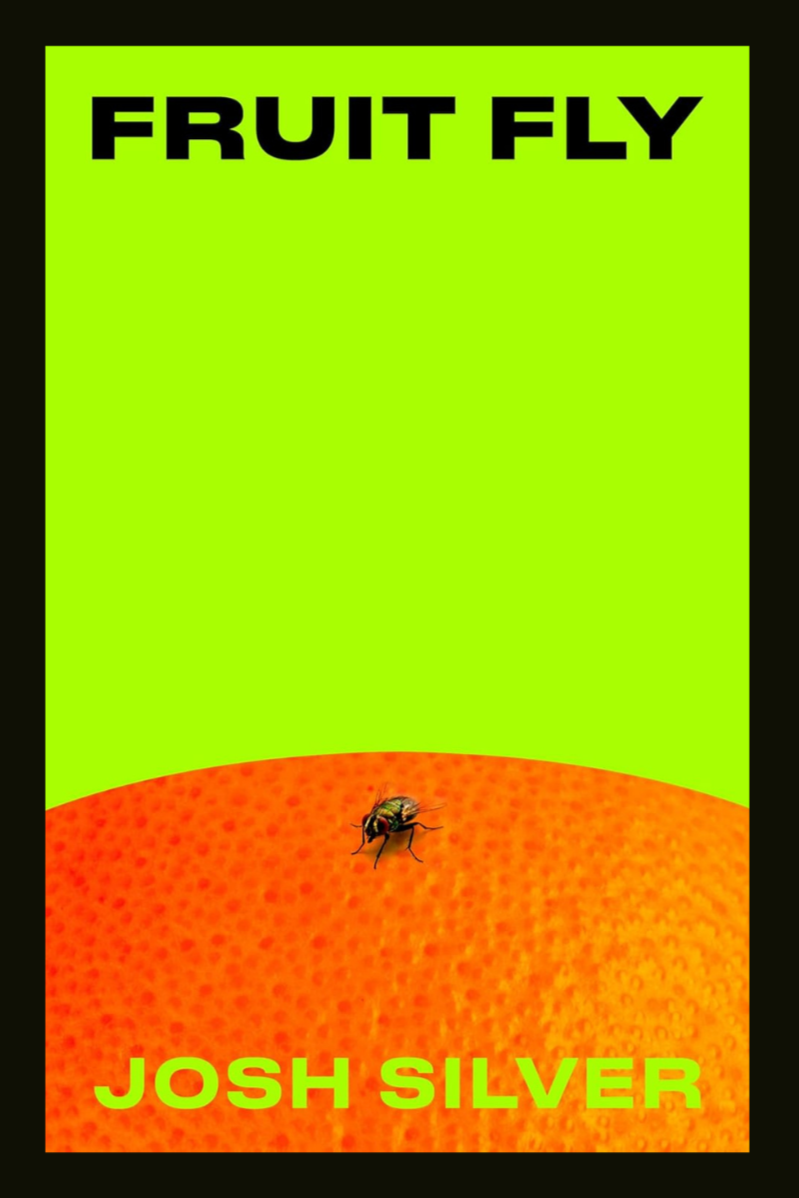
Fruit Fly – Josh Silver
There is so much going on in "Fruit Fly," a novel that starts as a publishing satire, morphs into a character study about addiction and exploitation, takes a hard turn into a domestic thriller and somehow finds its way back around to where it started.
The comparisons to "Yellowface" are inevitable, but they aren't quite right. Where R.F. Kuang's novel was primarily a takedown of publishing and cultural appropriation, Josh Silver is more interested in exploring ends justifying means.
Mallory is a formerly celebrated novelist approaching 40 who hasn't managed to publish a follow-up to her breakout. Her husband, Ronin, is a wildly successful Netflix executive who wants to start a family. Mallory, meanwhile, is struggling with alcohol dependency, mental illness and a serious case of main-character syndrome while working as a counselor with exactly three clients.
Then, while drunk after a party, she Googles how to write a bestseller and discovers that sad gay stories are having a moment. So, naturally, she decides to write one.
Her research begins by creating a Grindr profile using surreptitious photos of her sleeping husband. Mallory considers herself a staunch ally, although her allyship mostly seems to consist of enjoying drag shows. Soon she's accidentally attending a chemsex party — she thought she was going to a tea party — where she encounters Leo, a homeless young addict and sex worker, getting beaten up. She intervenes, but not before accidentally pepper spraying him.
This is basically the first few chapters, and the book does not slow down from there.
This disruption to her mundane existence is exactly the creative spark Mallory needed, and she becomes determined to find Leo again and mine his life for material. She crashes an AA meeting, introduces herself as "Mandy" and gradually pries into his history under the guise of friendship and therapy. Leo knows exactly who she is but has his own motives: Mallory is obviously wealthy, and getting close to her might give him something worth stealing.
Reality occasionally needs to be suspended, but reality isn't really the point. Silver is playing with ownership, class, mental illness, addiction, jealousy and sexuality, while asking what makes one person's suffering marketable and another person's invisible.
Mallory is also a spectacular narcissist — she even quotes her own novel in casual conversation. Silver writes her so convincingly that I might believe he were a straight, middle-aged woman if she weren't portrayed with an obliviousness that feels like thinly masked disdain. What queer person hasn't encountered some version of the aggressively well-meaning ally who loves the community largely as an accessory to herself?
Like "Yellowface," nobody really needs to be likable because much of the fun comes from watching these people — Mallory especially — dig their own graves.
But Silver is doing something more interesting than simply mocking the sad gay story. "Fruit Fly" also becomes one. Leo's addiction, sex work, homelessness and trauma could sit comfortably alongside the kind of literary fiction Mallory is trying to emulate — the novel even name-checks "A Little Life." Silver manages to satirize the commodification of gay suffering while simultaneously taking Leo's suffering seriously, a balance that's genuinely difficult to manage.
After Leo arrives at Mallory's house bloodied and high following a horrific assault, her elaborate house of cards collapses. Ronin discovers Grindr, Leo and the book she's secretly writing. Until this point he has seemed suspiciously saintly — and he was too good to be true.
Suddenly "Fruit Fly" starts channeling the domestic thrillers of the early aughts: unreliable women, gaslighting husbands and marriages that look much different from the outside. Ronin goes full Annie Wilkes, confiscating Mallory's technology and forcing her to write a romance novel while she secretly continues working on "Slay," the book based on Leo's life. This turn deepens Silver's central idea rather than abandoning it: Mallory is doing to Leo exactly what Ronin has done to her — exploiting a power imbalance while convincing herself she knows what's best for him. It also complicates whose life is "messed up." Leo's problems are impossible to hide. Mallory's are tucked inside a beautiful house and expensive clothes.
The book isn't flawless. Leo sometimes feels underwritten, particularly in the brief glimpses of his childhood and family, while Mallory occasionally veers toward caricature. Together, though, their strange kinship works. They recognize something damaged in each other and, despite everything they're doing to one another, occasionally become the only person with whom the other feels safe.
The last third is also absolutely bonkers — in a really campy, fun way. I had a general sense of where things might be headed and was still shocked watching Silver actually take us there. Chapters 55 and 56 gave me major "Scream" vibes. "Slay" becomes a kind of autofiction, first for Leo, then increasingly for Mallory herself. The story she's stealing becomes the story she's living.
The final jump forward 13 months adds one last clever turn. "Slay" is headed for publication and Mallory has rebuilt her life, while Leo is left confronting the fact that someone else has turned his pain into a lucrative success story.
So he starts writing. He has an idea for a rural horror novel. A revenge story. [chef's kiss]
While this occasionally felt long, Silver demonstrated a command of character and narrative that made me like this much more than I expected. Every time I thought the novel had abandoned what made its opening so sharp, it zigzagged back toward its central questions from another direction.
The audiobook is excellent, particularly as everyone becomes increasingly unhinged in the final third. I initially thought Will M. Watt would be the obvious standout for the way he handles every stage of Leo's mania, but Fiona Mitchell absolutely turns it on by the end. At one point she has to perform a British woman doing an American accent that still sounds British while speaking through a mouth full of veneers. It must be heard to be believed.
The buzz around this one is earned.
Rating (story): 4/5 stars
Rating (narration): 5/5 stars
Format: Audiobook (library loan)
Dates read: August 10 – August 13, 2026
Multi-tasking: Good to go. There’s some repetition in the first half, so as long as you’re paying close enough attention to remember characters and plot points you’re fine. But give the last third your full attention.