Lisey’s Story – Stephen King
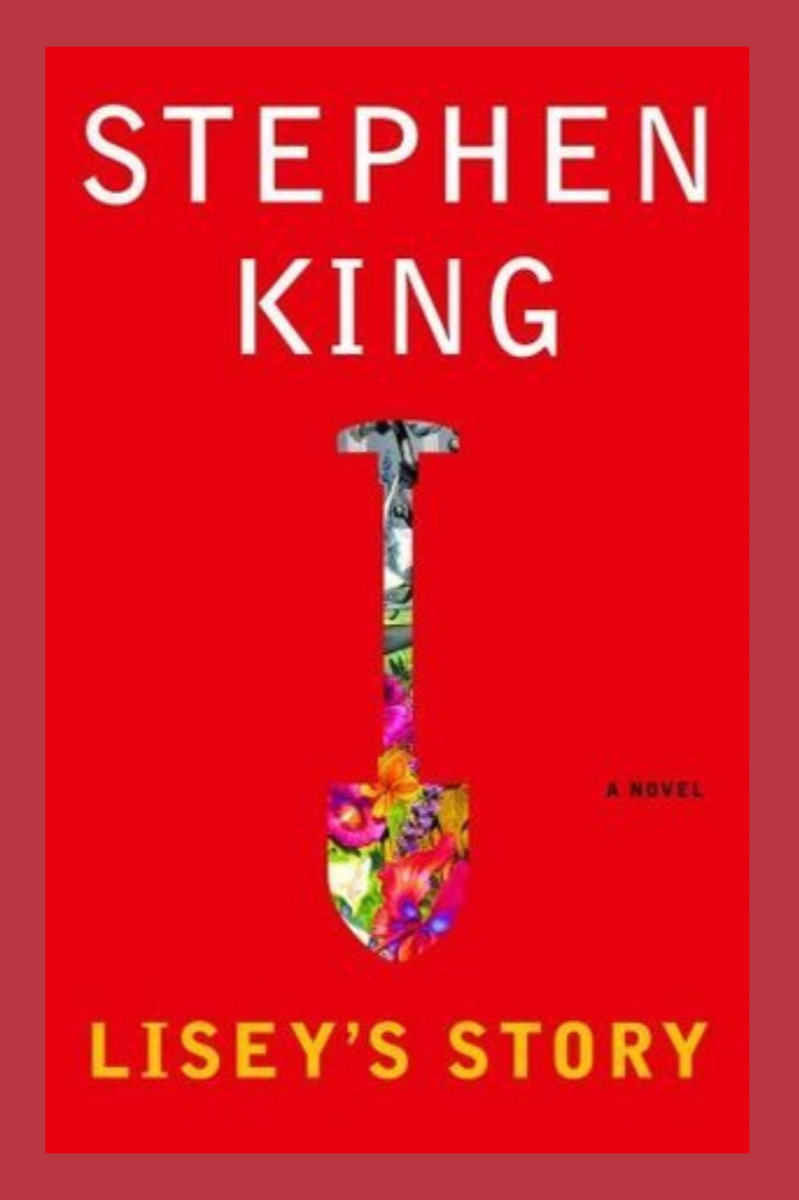
I've read a lot of Stephen King, and I'm not sure I've encountered another of his novels quite like "Lisey's Story." It's probably the most avant-garde I've seen King get, playing with structure, chronology, language and genre in ways that are sometimes fascinating and sometimes frustrating.
It's a love story, family drama, psychological thriller, stalker narrative and supernatural fantasy all loosely stitched together, and depending on where I was in its 500-plus pages, I could have told you I was reading a very good King novel, an okay one or a collection of loosely connected short stories.
At the center is Lisey (lee-see) Landon, the widow of Scott Landon, an enormously successful novelist who died two years earlier. After 25 years together, Lisey is still struggling to separate her identity from his, talking to Scott out loud and reliving their courtship and marriage as she slowly sorts through the remnants of his life and career.
King tells much of this through a kind of stream of consciousness, moving between the present and Lisey's memories. Gradually, we learn that Scott was deeply damaged by an abusive childhood, including a father who killed his brother before Scott eventually killed him. Throughout his life, Scott also struggled with periods of mental illness and an ability to travel to Boo'ya Moon, a magical alternate world that could both heal and hurt.
Meanwhile, King has at least two other stories going. Lisey's sister Amanda has become catatonic and is institutionalized, forcing Lisey and her sisters Darla and Cantata to confront Amanda's mental health and their own complicated relationships. Then there's Professor Joseph Woodbody, who wants access to Scott's unpublished papers and uses deranged fan Jim Dooley to pressure Lisey into handing them over. Dooley quickly goes rogue.
All that to say, it's a lot of book.
The section I found most engaging flashes back to 1988, when another deranged fan shoots Scott after a groundbreaking ceremony at a small college. Lisey grabs the ceremonial shovel and attacks the shooter, saving Scott's life and turning the shovel into a kind of talisman in their marriage.
These flashbacks are where the novel worked because they make the intimacy between Lisey and Scott feel lived and not merely stated. She wasn't the wife standing beside a famous author; she was his protector, confidante and safety net.
That intimacy extends to the private language they've created together: smucking, good bools, blood bools, going gomer and seemingly 400 other words and phrases I was considerably less charmed by. At first, I appreciated what King was doing because who doesn't develop weird shorthand and made-up language with a spouse or partner?
But he uses it so relentlessly that eventually I felt like I was reading a foreign language spoken primarily by toddlers. This is the make-or-break detail for readers, I believe. You’ll either be charmed or annoyed – there is no in between.
I was initially intrigued by the uncertainty surrounding Boo'ya Moon and Scott's continued presence in Lisey's life. Was it real, or was it part of her own mental break? But as the alternate world became less mysterious and more central to the plot, it lost me. By that point, I was mostly soldiering through a middling novel, far more interested in Scott's past and his relationship with Lisey than the mythology of Boo'ya Moon or Amanda's storyline.
For all my frustrations, I appreciate how much King celebrates partnership here and the strange ways it can endure even through death and separation. This may be the most emotional I've seen him when writing about a relationship, and knowing that King has called "Lisey's Story" his favorite of his own novels makes sense to me even if it's nowhere near the top of mine.
It's also interesting that I happened to read this immediately after "A Cosmology of Monsters," because both books combine family trauma, mental illness, alternate realities and monsters in ways that occasionally left me wondering what exactly I was supposed to make of them. The difference is that King's writing and character development kept pulling me through even when the story itself was losing me.
Mare Winningham does a fine job narrating the audiobook, although I guess I wanted more from either her or the novel because both ultimately left me a little indifferent.
There are also echoes here of later King books like "Billy Summers" and "Holly," although those are much more straightforward crime narratives, while the earlier "Gerald's Game" covers some similar supernatural and relationship territory in a much tighter story.
Ultimately, this feels like a deep cut for Constant Readers only.
Rating (story): 3/5 stars
Rating (narration): 3/5 stars
Format: Audiobook (library loan)
Dates read: September 11 – September 15, 2026
Multi-tasking: Not recommended. The non-linear structure and private language demand attention. Even with full focus, you may lose the threads.