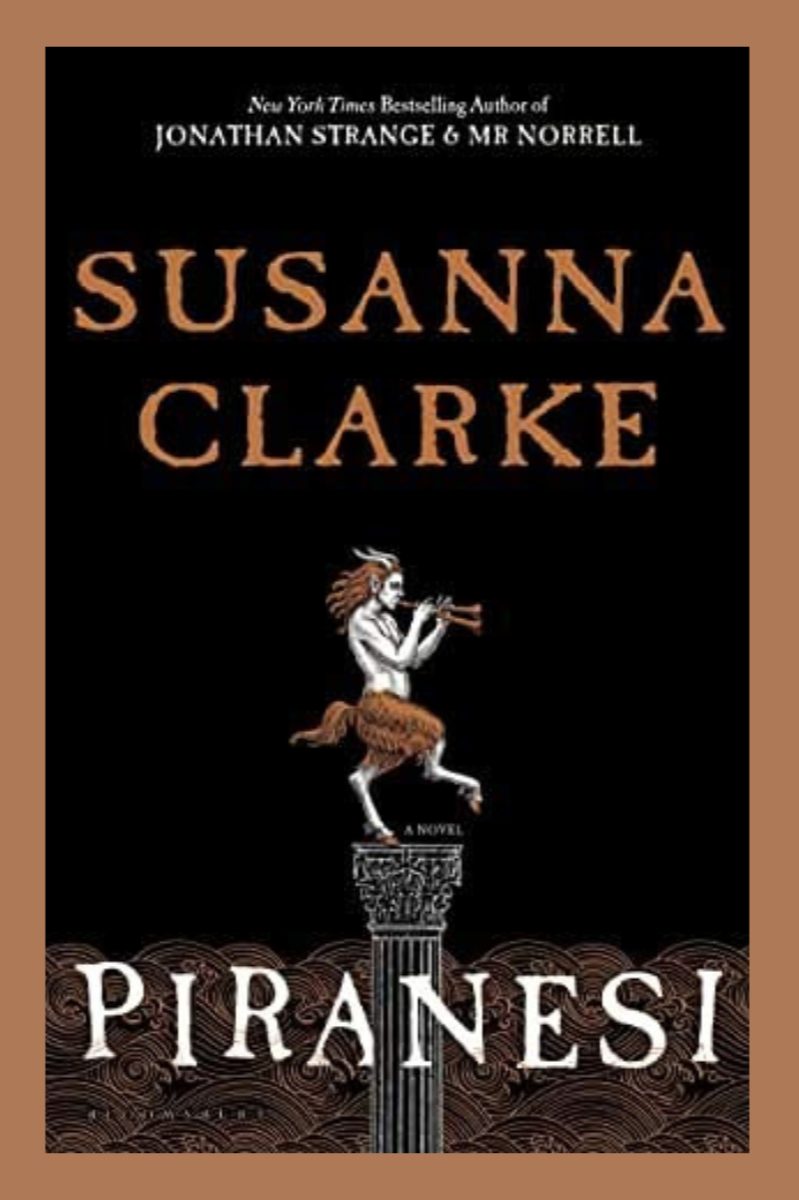
Piranesi – Susanna Clarke
This is one of those books that arrives wrapped in so much critical adoration that questioning it feels almost impolite. It has a passionate, devoted readership and the Women's Prize for Fiction on its shelf, so clearly Susanna Clarke has the imagination and chops to back up the hype.
Spoiler: I didn't love it. I can't help feeling it's the kind of novel most people don't fully understand but won't admit it, so they keep talking about how great it is — hoping to get others equally confused. Anyway, I digress.
On the plus side, the setup is strange and genuinely intriguing: a man who calls himself Piranesi lives inside an infinite labyrinthine house with an ecosystem all its own — birds, clouds, tidal waters and thousands of statues — alongside a single companion he knows only as The Other.
Piranesi keeps meticulous journals, measures time by the movement of albatrosses, and asks existential questions into a void, chief among them who exactly he is writing to if only one other person exists. Is it a dream? A prison? Something else entirely? It's the kind of opening that makes you feel like you're in very capable hands.
Those hands then proceed to do very little with your trust for quite a long time.
For a novel barely 245-pages long, "Piranesi" is exhausting. All the details build atmosphere without creating meaning, and by the 25 percent mark I was actively questioning whether I was along for this ride. The mystery does eventually unspool through journals and fragments of a forgotten identity to the slow realization that Piranesi has been imprisoned by the very man he trusts — but the payoff is thinner than the setup deserves.
The mechanics of how anyone gets into or out of the House are very lightly explained. For a reader who rarely wades into fantasy and magical realism, I needed more concrete answers than what Clarke provides. Nothing is explained. Why are there birds? Why clouds? Why water? The author seems entirely unbothered by these questions, and eventually I stopped being bothered too, because I stopped caring.
What Clarke is doing thematically is the most interesting part. The novel leans into ideas about cults — how people get drawn in, how reality gets reshaped around a charismatic authority figure and how captivity can come to feel like home. Piranesi's reluctance to leave the House, even after learning the truth of his imprisonment, is genuinely the best moment in the book. It's just buried under so much mythology to get there that it almost doesn't matter.
Chiwetel Ejiofor's narration is the one unqualified success here — he's exceptional, bringing emotion to Piranesi that made me want to stay even when the story was actively losing me. But make no mistake: this was a slog. A beautifully written, exceptionally narrated slog that I regularly considered abandoning. Short books should not feel twice their length.
For the genre, it may well be a masterpiece. For this reader, it was an endurance test that just barely cleared the finish line.
Rating (story): 2/5 stars
Rating (narration): 5/5 stars
Format: Audiobook (personal library)
Dates read: March 27 – March 29, 2026
Multi-tasking: Not recommended. The world-building demands full concentration — though even with full attention, prepare to spend considerable time wondering what the hell is happening and whether it will ever matter.