Ranking the Couples in the “Game Changers” Series
One of the more interesting side effects of reading the entire “Game Changers” series straight through is that you stop thinking about the books individually and start thinking about the relationships as if they exist in the same ongoing world. By the time you get to the later entries, you’re not just reacting to what’s happening on the page, you’re tracking who feels stable and who you’re not entirely convinced is going to last.
Here’s my take on the best couples in the series and if they’ll make it to their tenth anniversary.
1. Shane and Ilya — The Reason This Series Works
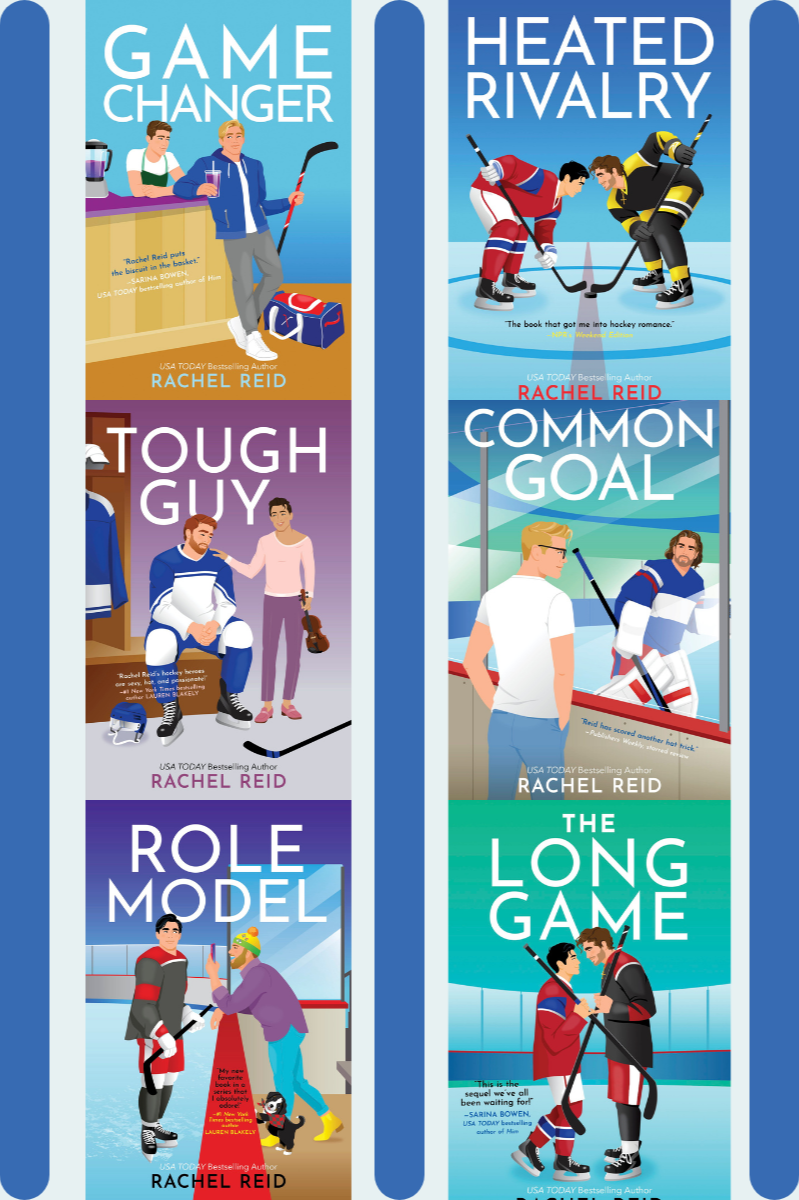
There’s a reason “Heated Rivalry” is the entry point for so many people.
Shane and Ilya are the emotional core of the entire series. Not because they’re the healthiest couple (they’re not), but because they’re the most compelling. Their relationship is built on contradiction: rivalry and intimacy, control and vulnerability, secrecy and deep emotional dependence.
What makes them work isn’t the sex – it’s the tenderness underneath all of it.
That said, “The Long Game” exposes something uncomfortable: for a couple that’s been together 10 years, they don’t always act like it. The communication issues, the emotional backsliding, Shane’s inability to take the off-ramp even when it’s handed to him – it’s frustrating.
And yet, they’re married. They’ve chosen each other over and over again, and more importantly, they refuse to give up on one another. Even when Reid’s execution wobbles, the bond feels permanent.
Do they make it 10 years? They already have. The real question is whether they can make it another 10 happily. I think, eventually, yes. Mostly because Ilya will drag them there if he has to.
2. Troy and Harris — The Most Likely to Actually Be Happy
“Role Model” is where the series finally feels like it understands itself. Troy and Harris are the cleanest execution of Reid’s central idea: what it looks like when someone actively unlearns the version of masculinity they built to survive.
Troy’s growth feels earned, and Harris is already fully formed. Together, they actually function like a real couple – communicating, adjusting and supporting each other without constant drama.
They’re also the least performative relationship in the series. There’s no grand push-pull dynamic driving them. It’s just two people figuring it out in a way that feels sustainable. By the end of book six, they’re living together, and that tracks.
Do they make it 10 years? Honestly, they’re the couple I’d bet on for the long haul. Not because they’re the most exciting, but because they’re the most stable.
3. Scott and Kip — Built to Last
Scott and Kip are the blueprint. “Game Changer” introduced Reid’s formula and their relationship sets up everything the series goes on to explore. What makes them work is that they actually resolve their central conflict. Scott comes out, he integrates Kip into his life and they move forward.
By the time we see them later in the series, they’re engaged, then married and navigating the realities of fame and visibility together. There’s some strain there – Scott overcorrecting a bit, Kip adjusting to the spotlight – but it feels like natural progression.
They’re not the most exciting couple, but they’re one of the most believable long-term.
Do they make it 10 years? Yes. Maybe with some bumps and a slightly chaotic public life, but the foundation is there.
4. Ryan and Fabian — Opposites Attract
“Tough Guy” is the biggest swing Reid takes, and Ryan is one of her most interesting characters. He’s anxious, introspective, disillusioned with hockey and trying to figure out what he actually wants out of life. That’s compelling.
Fabian, less so. He never quite feels as fully realized, and there’s a slight disconnect in the relationship from the start. While Ryan is comfortable fading into the background, Fabian’s craving for the spotlight and external validation feels like it could create tension over time.
By the end of book six, they’re touring together, which sounds romantic in theory, but it also feels like a temporary solution rather than a stable one. There’s a version of this where Fabian represents freedom for Ryan but not necessarily permanence.
Do they make it 10 years? I don’t think so. This is a relationship that matters deeply in the moment, but not one that lasts.
5. Eric and Kyle — The One That Feels the Most Conditional
This is the only couple where I actively questioned the long-term viability while reading.
Eric is interesting – a late-in-life realization, a man who built an entire identity before allowing himself to question it. That part works.
The relationship doesn’t. The friends-with-benefits but definitely not feelings setup never feels earned, and the emotional tension comes across as manufactured. Ironically, the physical dynamic is the most believable part.
And then there’s the throwaway line in “The Long Game” about them possibly being open, which, honestly, tracks. It’s not framed as a problem, but it does reinforce the idea that their relationship is more flexible – less rooted – than the others.
That’s not inherently a bad thing, but it does make it feel less like a forever situation.
Do they make it 10 years? Maybe, but not in the same way as the others. This feels like a relationship that evolves, shifts and possibly redefines itself rather than staying fixed.
What These Couples Say About the Series
What all of this really comes back to is something I didn’t expect going into this series, which is how much I would care about whether these relationships feel sustainable. Some of these couples grow into something solid, others are probably one good fight away from unraveling.
The fact that I can even imagine their futures means Reid did her job. For a series that is, at times, messy, repetitive, unrealistic and very much not what I typically read, that’s kind of impressive.
I mean, I’m out here evaluating the long-term viability of fictional hockey players like I know them personally. Which, honestly, tells you everything you need to know about my book hangover.