Sink: A Memoir – Joseph Earl Thomas
Joseph Earl Thomas recounts a childhood shaped by instability, addiction, poverty and violence, moving through the small, often hostile worlds of his neighborhood, school and extended family.
Raised largely by his white grandfather — a neglectful, verbally abusive and casually cruel man — Thomas grows up absorbing daily lessons in humiliation and endurance. Hunger is constant, safety is conditional and masculinity is enforced through violence and ridicule. From an early age, his perceived softness marks him as a target, both at home and among his peers.
“Sink: A Memoir” is told in the third person, with the author referring to himself as Joseph or Joey throughout. Structurally, it reads almost like a role-playing game, with moments to be survived and cleared before moving on. It’s an interesting choice, but one that creates distance.
Still, that distance makes the moments of genuine development stand out more sharply. One of the book’s quieter strengths is how Thomas’s language evolves alongside his experience, particularly around sex and the body.
Early references rely on deliberately childish euphemisms — “winky” or “coochie” — which emphasize both his youth and his detachment from what’s happening to him. As his sexual experiences deepen and become more complex, the language shifts as well, serving as a subtle but effective marker of growth.
This wasn’t quite what I expected, but a few of the “vignettes” were compelling, showing the richness of Thomas’ voice and perception. After catching pneumonia, he spends days in the hospital and experiences stability for the first time: regular meals, privacy, people checking in on him. He assumes there must be a catch, because no one is this kind for free.
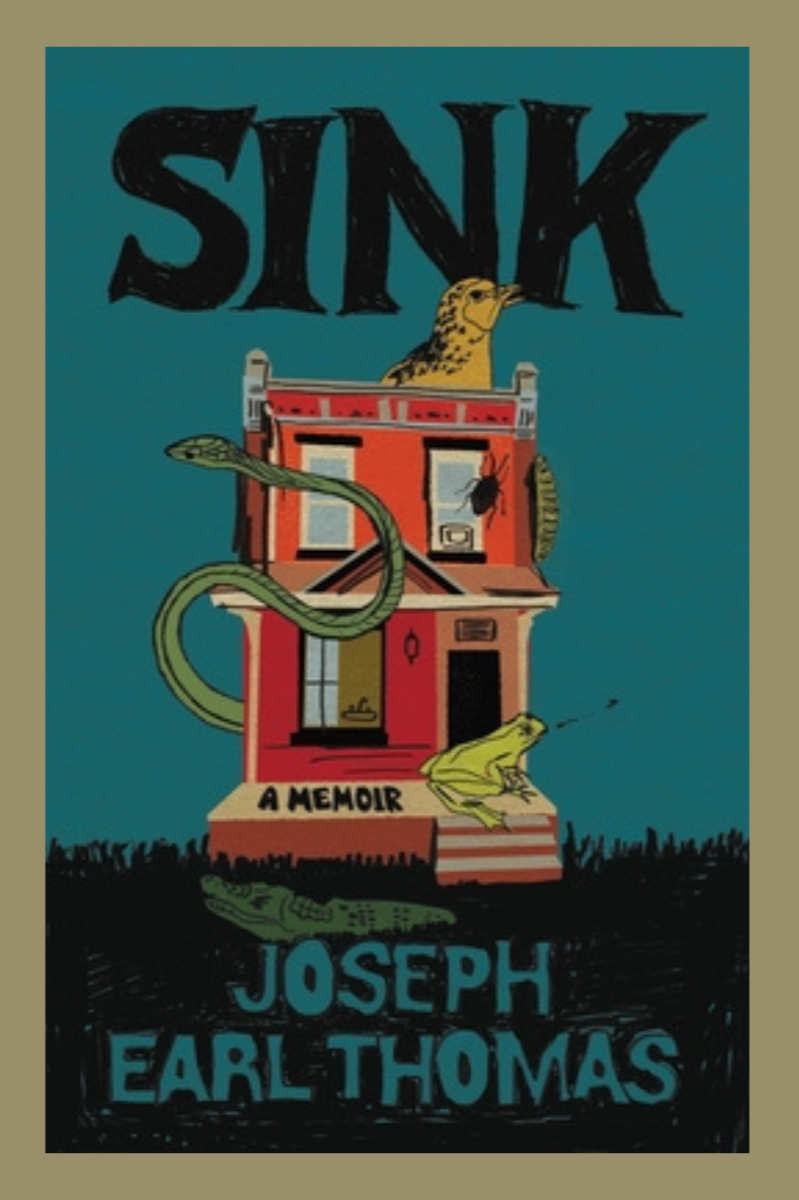
His attempts to care for animals — feeder mice, snakes and even an alligator — read as practice for the nurturing he wants but never receives. An episode about wanting to be turned into a vampire, to become something both feared and desired, is quietly devastating, even if it feels entirely logical in a child’s mind.
However, frequently, ideas repeat without deepening, and others — particularly later experiences involving sex — are described more than examined. Narrated by the author, the audiobook is serviceable but emotionally flat, delivered in a steady, conversational tone with little variation.
There’s universality here, especially in the ’90s and early-2000s cultural references and the ache of wanting to fit in. But by the end, “Sink” felt like a polished diary — confessional and a little depressing, but largely more meaningful for an audience of one.
Rating (story): 3/5 stars
Rating (narration): 3/5 stars
Format: Audiobook (personal library)
Dates read: January 13 – January 16, 2026
Multi-tasking: Good to go. It can sometimes feel like a mess of names if you aren’t paying close attention – at least in the beginning – but it’s pretty easy to follow along.