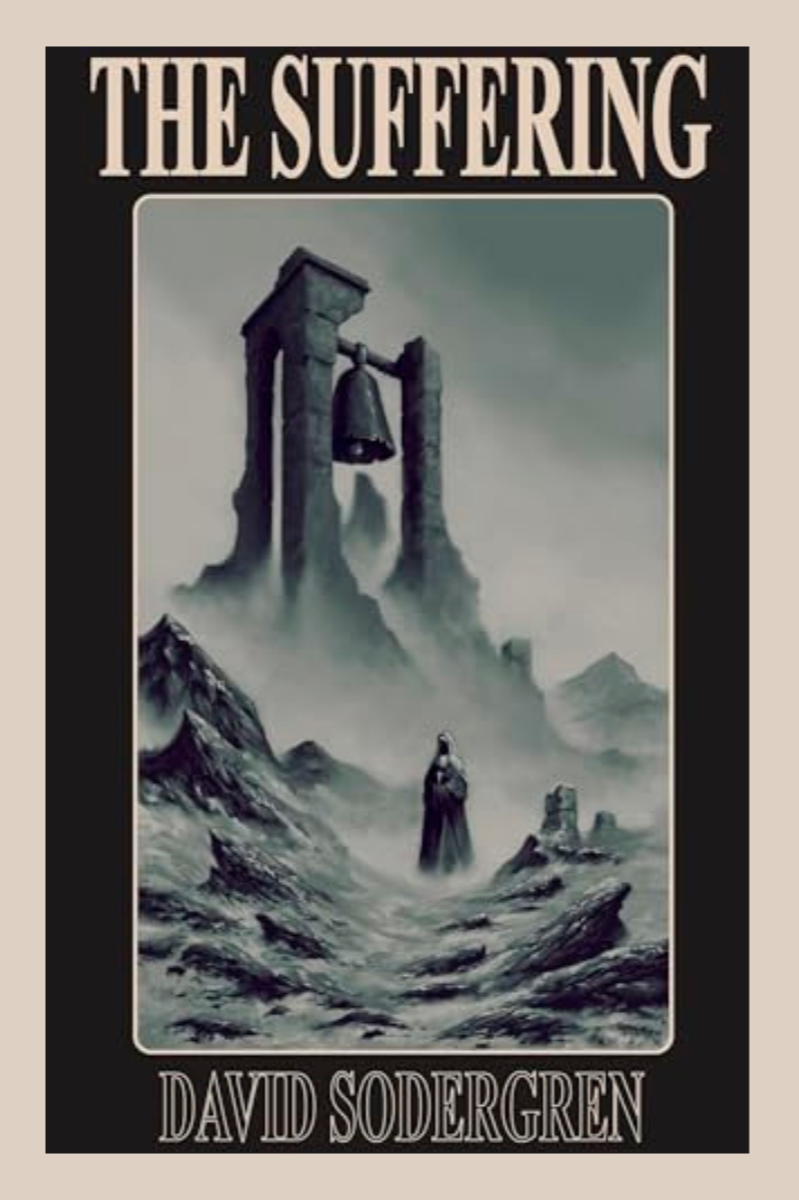
The Suffering – David Sodergren
Set in 1897, "The Suffering" takes place at Sant'Arcangel, a convent so remote in the Italian mountains that it's effectively cut off from the outside world once winter hits. As two nuns are gathering final provisions before an approaching storm, they discover a young woman with ghastly injuries and no memory of who she is or how she got there. Luckily, the town doctor, Henrik Persson, is still around. Less luckily, he's mostly still around because he's sleeping with one of the nuns.
It's a great horror setup, with shades of a locked-room mystery and a slowly building feeling that something is very wrong before all hell breaks loose.
The novel is primarily body horror, and David Sodergren does not hold back. The mysterious woman, eventually named Lucia, appears to bring with her a skin disease that spreads through touch and bodily fluids, covering its victims in putrid sores and pustules while giving them an insatiable need for sex and physical intimacy. Before long, the convent is essentially overrun by "cannibalistic nymphomaniacs."
Someone on Reddit said the body horror here makes "The Troop" look tame. I'm not sure I'd go quite that far, but Sodergren certainly tests the limits. At one point, an infected nun murders the cook and feeds her body to the other sisters, who promptly vomit everywhere and become infected themselves. And there's an extremely descriptive scene involving a woman's teeth popping the pustules on another woman's labia that I'm perfectly happy never thinking about again. So, naturally, I've now made sure you have to think about it.
For all the bodily fluids, "The Suffering" has the sensibility of an old-school slasher. Many of the characters are deliberately unlikable, information is withheld, there's an obvious final-girl setup and eventually you're mostly waiting to see who gets it next. There's something almost gleefully trashy about the whole thing, and after a relatively slow start, it moves fast.
The increasingly unhinged behavior also gives Sodergren opportunities to play with the convent's power structure. Mother Superior becomes convinced there's an evil among them, shoves a crucifix into Lucia's vagina and then attempts to throw herself from the bell tower. Sister Claudia, her sadistic second-in-command, witnesses this and, rather than warning everyone that things have gone catastrophically wrong, essentially sees a job opening.
Unfortunately, the more outrageous things become, the less interesting I found the story. Once everyone starts succumbing to the infection, the tension of the first third largely disappears and the story becomes increasingly predictable. I saw the ending coming from a mile away. There's only so much suspense you can maintain once most of your cast has turned into sex-crazed, pus-covered murderers.
The writing doesn't always help. It can be hackneyed and cliché-ridden, with obvious foreshadowing and a male gaze that's pretty hard to miss in a book populated almost entirely by women. I appreciated it a little more after learning Sodergren was inspired by the "nunsploitation" films of the 1960s. That deliberately lurid, exploitative sensibility is clearly what he's going for, and he certainly commits to it.
Hannah Curtis' narration is solid, finding the right balance between somber reservation and incredulity among the uninfected and completely unhinged sadism once the sisters succumb.
This was my first read by Sodergren, and I can see why he has a following, but I'm not sure I'd seek him out again. Religious horror and extreme body horror aren't really my thing, so admittedly I'm not the ideal audience for a book that enthusiastically combines the two.
Two-and-a-half stars, rounded up to three because, well, I've read worse.
Rating (story): 3/5 stars
Rating (narration): 4/5 stars
Format: Audiobook (personal library)
Dates read: September 3 – September 6, 2026
Multi-tasking: Encouraged. There’s a large cast, but honestly the names don’t really matter. This is more focused on grossing you out, so do yourself a favor and pay attention to something else.