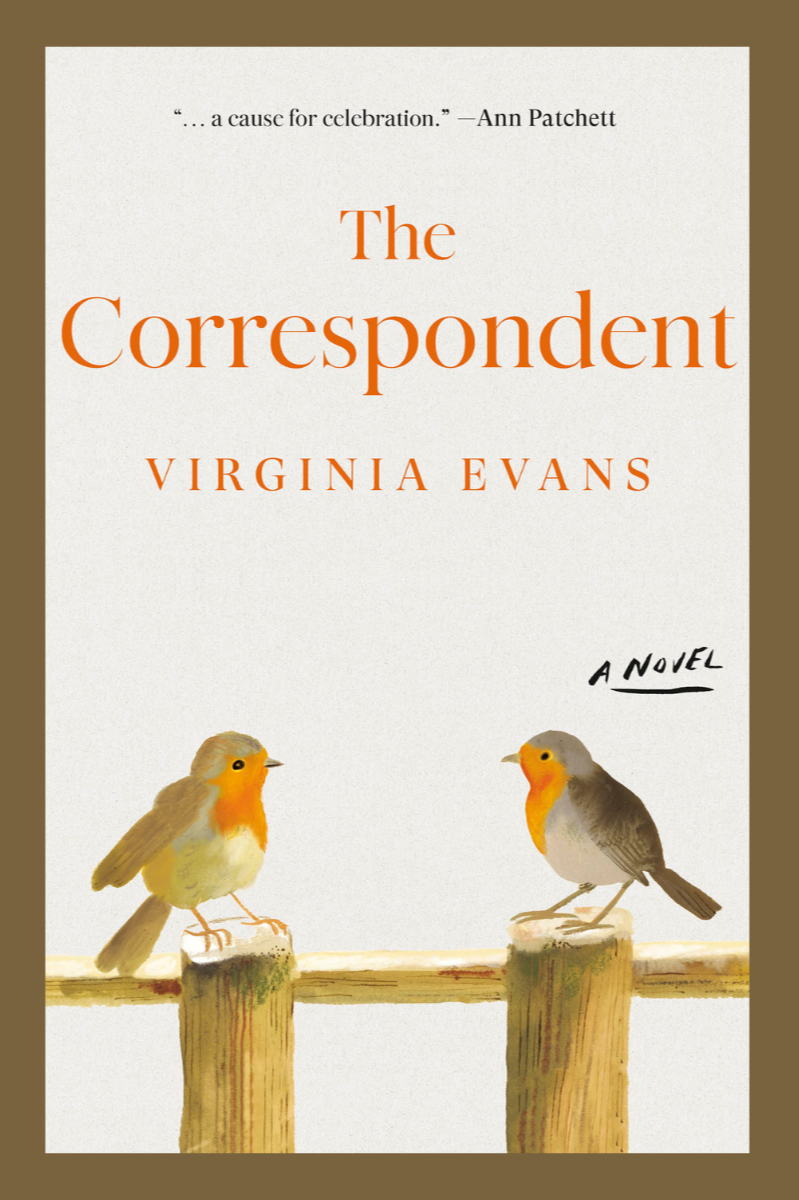
The Correspondent – Virginia Evans
If you’re going to build a novel entirely out of letters, you’d better have a character worth writing to.
Thankfully, Sybil Van Antwerp is one.
Virginia Evans’ “The Correspondent” is an epistolary novel that moves quickly but carries more emotional weight than its tidy premise suggests. Sybil, a retired lawyer in her eighties, spends her mornings writing – to her adoptive brother Felix in Paris, to her ex-husband Daan, to a depressed teenager named Harry Landy, to customer service representatives, to literary figures like Joan Didion and Ann Patchett, and to one person she never quite has the courage to send a letter to. Through these letters, we piece together a life marked by ambition, grief and stubborn pride.
Sybil is brisk, unsentimental and often very funny. She despises poor manners, petty power plays and what she sees as the erosion of decorum. She suffers no fools but that sharpness feels earned, not kitschy.
The death of her son Gilbert fractured her marriage and hardened her in ways she doesn’t fully confront until late in the novel. Her ex-husband’s cancer, her fraught relationship with her daughter Fiona and her complicated devotion to Felix all simmer beneath the clipped efficiency of her prose.
Evans balances the “big” themes — reconciliation, aging, identity and forgiveness — with the bric-a-brac of daily life: local garden club politics, being denied the right to audit a university course, the slow loss of agency as her eyesight fades. The small irritations matter because they’re what fill a life.
The structure risks repetition, since letters must re-explain context, and bingeing the audiobook can blur plot threads. There are many characters orbiting Sybil, and I took notes to keep everyone straight. Still, Evans handles the format better than most who attempt it.
The novel’s central question — who is Sybil if she can no longer read or write? — lands harder than the occasional heavy-handed symbolism about blindness. Correspondence isn’t a hobby; it’s her identity, control mechanism and refuge. It’s also the one place she allows herself vulnerability.
The full-cast audiobook elevates the experience. Maggie Reid captures Sybil’s bite and brittleness beautifully, and the supporting narrators — Jeff Ebner as Harry, Mark Bramhall as Theodore, Kimberly Farr as Rosalie and Peter Ganon as Basam — help distinguish the many voices and add texture.
Overall, this was a quick, thoughtful crowd-pleaser with enough emotional depth (keep the tissues nearby in the final pages) to feel earned rather than gimmicky. Book clubs will eat it up.
Rating (story): 4/5 stars
Rating (narration): 4/5 stars
Format: Audiobook (library loan)
Dates read: February 8 – February 11, 2026
Multi-tasking: Not recommended. It’s an easy read on the surface, but the devil is in the details and if you’re not paying attention, you’ll miss what makes it work.