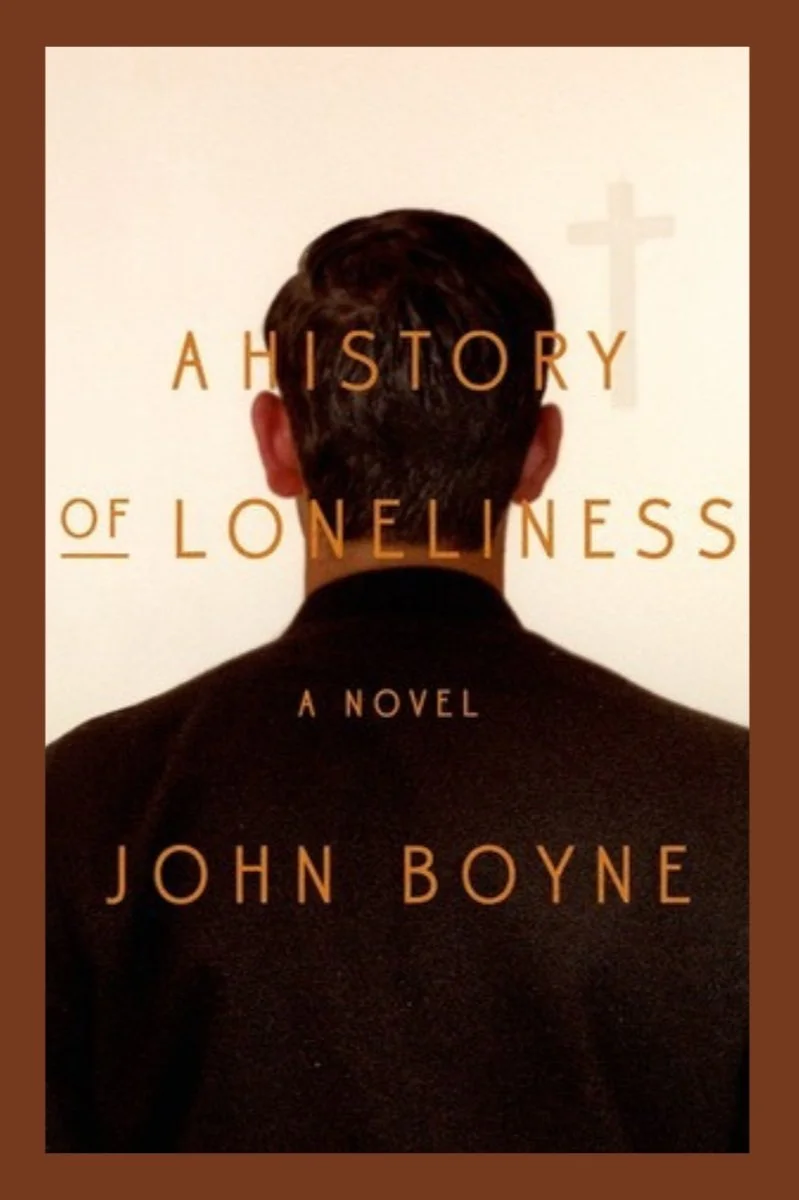
A History of Loneliness – John Boyne
John Boyne is at his best here — restrained but expansive, emotive without being sentimental and razor-sharp in his observations. If you’ve read him before, you know that the pleasure of his storytelling isn’t just in the destination but in how he gets you there, and this novel is no exception.
“A History of Loneliness” may broadly trace the arc of Ireland’s unraveling trust in the Catholic Church, but at its heart, it’s a quiet, devastating character study — not unlike John Williams’ “Stoner” — of one man’s complicity and crisis of faith.
Odran Yates is one of Boyne’s most compelling protagonists, which is saying something for a writer who gave us Cyril Avery and Maurice Swift. A man of unending, if surprising, faith, Odran entered the priesthood in the 1970s, not out of calling but because his mother told him too. His father’s murder-suicide and his mother’s grief-driven piety left him with little choice.
Over decades, Boyne walks us through the shifting public perception of the Church from the reverence of the 60s and 70s to the disgust and distrust of the early 2000s. Odran navigates things mostly from afar, quietly teaching at a Catholic school and overseeing a parish, but mostly untouched by scandal until he can no longer ignore it.
There are some nice historical elements that work organically into the story, including Ordran’s time serving Pope Paul VI and his friendship with the future John Paul I. I didn’t know the details about his 33-day papacy, and Boyne positions his early death as a quiet conspiracy to protect the Church from real reform.
Still, I wish the author had pushed harder in a few places. The final revelations — that Odran himself was abused by a priest, that he saw the signs of abuse in his nephew and that he never confronted his friend Tom — land too softly.
The closing chapters should’ve been angry and devastating, but instead, they feel like a slow unraveling of things we already guessed. Odran’s eventual reckoning with his own complicity feels overdue, not just in the plot, but in the writing.
That said, I was never bored. Boyne’s prose is beautiful, and Gerard Doyle’s narration made for a rich audio experience. Odran’s emotional restraint, often taught by the very institution that fails him, is captured well in both voice and writing. This book raises thorny questions about the difference between being innocent and being unaware — and how dangerous that difference can be.
I’m still not sure what Boyne wants us to feel: Are we meant to grieve the good priests who stayed silent, or condemn them? Maybe both. Maybe that ambiguity is the point. Either way, it left me unsettled, and that’s not a bad thing.
Rating (story): 4/5 stars
Rating (narration): 4/5 stars
Format: Audiobook (personal library)
Dates read: June 21 – June 25, 2025
Multi-tasking: Good to go, but with Boyne, the devil is in the details. If you aren’t paying close attention, you’ll miss his amazing character work and subtle historical touches.