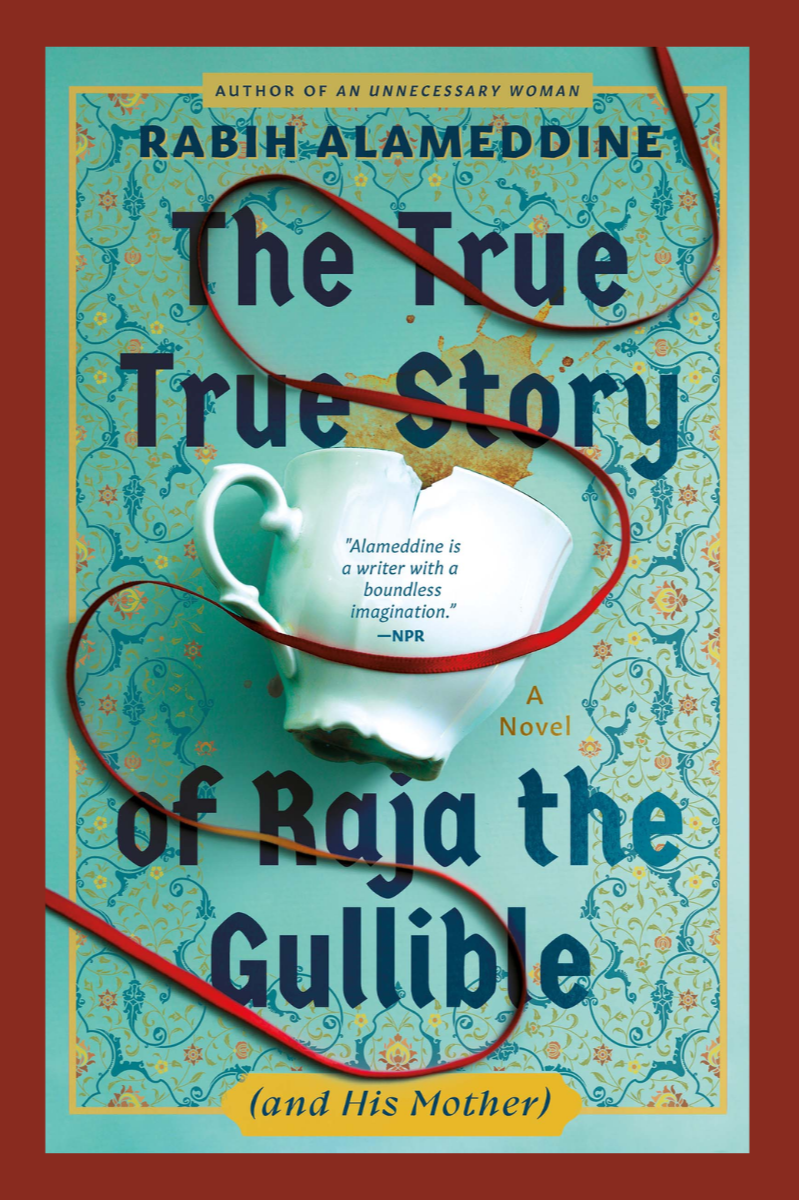
The True True Story of Raja the Gullible (and His Mother) – Rabih Alameddine
I hadn’t heard of “The True True Story of Raja the Gullible (and His Mother)” until it was long listed — and then won — the National Book Award. If I’m being honest, I wasn’t planning to read it until I learned there were queer elements.
Even then, I hesitated out of fear that it would be another one of those novels. You know the type: earnest, heavy-handed explorations of grief, shame and otherness in an unfriendly culture. I don’t have anything against those books, they’re just not what I’ve been in the mood for lately, and they often feel a little too on-the-nose for literary awards.
What I didn’t expect was how strange, funny and utterly engrossing “True True” would be, or how quickly I’d find myself revising my end-of-year reading lists to make room for it.
From the opening pages, Rabih Alameddine establishes a strong, conversational cadence. Raja’s voice is wry, observant and gently self-lacerating. He’s a 63-year-old gay man living in Beirut with his octogenarian mother, Zalfa, an arrangement defined by fierce loyalty and a complete disregard for boundaries.
Raja’s love of books, cats, solitude and order sits in constant tension with his mother’s need to know every detail of his life. Their relationship is exaggerated at times, but it feels emotionally true, especially once the novel’s “us against the world” dynamic begins to take shape. These two have been through everything together, though always in a way that positions Zalfa as the protector, no matter how old her son gets.
One of the book’s early pleasures is its reflection on aging as a gay man. Raja still desires men, but that desire has softened into something more remembered than urgent. Alameddine handles this shift without sentimentality that is candid and unexpectedly relatable.
Structurally, Alameddine takes his time, but it’s okay when you’re having this fun. Part two functions largely as setup, layering Beirut’s political instability, financial collapse, the pandemic and the everyday rhythms of Raja’s life. He moves seamlessly between past and present, allowing details to surface without signaling which threads will matter later and which simply enrich the portrait.
It’s charming without being soft, political without being preachy and deeply invested in the texture of family life. When Raja pauses to note, “A tale has many tails and many heads…” I was ready to follow all of them.
Things grow darker as the story progresses but not in the ways I expected. We glimpse Raja’s abusive father and a homophobic family dynamic that weaponized gender nonconformity for entertainment, before arriving at the novel’s most arresting and unexpected section.
What unfolds — Raja’s kidnapping at 15 by a friend, Boodie, prolonged imprisonment, and a disturbing yet complicated sexual relationship — is stranger and more engrossing than any neat version of trauma I’d anticipated. Alameddine resists simplifying it, making Raja both victim and participant, harmed and discovering himself at the same time. That unresolved tension is where the novel feels most alive.
The other major events hinted at early on – the abduction, the financial collapse, the pandemic and the Beirut explosion of August 2020 – combine to paint a vivid picture of daily life in Lebanon. Raja truly is gullible, especially with men, repeatedly falling for those who ask something of him.
Around him is a supporting cast that occasionally veers toward caricature but never fully breaks credibility: his seemingly indestructible, cruel aunt; his cousin Nahed, a lesbian who becomes a genuine friend and emotional equal; and Madame Taweel, Zalfa’s formidable best friend and local kingpin who can solve nearly any problem in minutes.
When the long-teased American writing residency finally arrives, the payoff is intentionally anticlimactic. [minor spoiler] Raja learns it was orchestrated by Boodie, now seeking forgiveness — and love. Raja refuses the apology and storms off in a scene that plays more comedic than cathartic. I was left wanting more, especially Boodie’s perspective after decades of silence, but perhaps that absence is the point. [spoilers ended]
Overall, I liked this book a lot. It exceeded my expectations and, like last year’s winner “James,” suggests the National Book Award isn’t afraid of honoring a novel that’s broadly appealing without being shallow.
While there are narrative threads I could’ve done without – and others I wish had been explored more deeply — the book largely holds together. Raja’s queerness is central, though I did want a deeper reckoning with his mother’s acceptance beyond her fierce, sometimes cartoonish loyalty.
The audiobook narration by GM Hakim is excellent. He gives Raja a lived-in presence that makes the story feel truly confessional. Since the novel is told entirely from Raja’s perspective, the restrained approach to other voices never bothered me.
“True True” is far more entertaining than its dust-jacket suggests, and it’s absolutely worth the time.
Rating (story): 4.5/5 stars
Rating (narration): 4/5 stars
Format: Audiobook (library loan)
Dates read: December 19 – December 23, 2025
Multi-tasking: Okay. There are a lot of characters, timeline shifts and little details that really add texture to the story. If you aren’t paying close attention, you’ll likely find this to be a meandering mess.