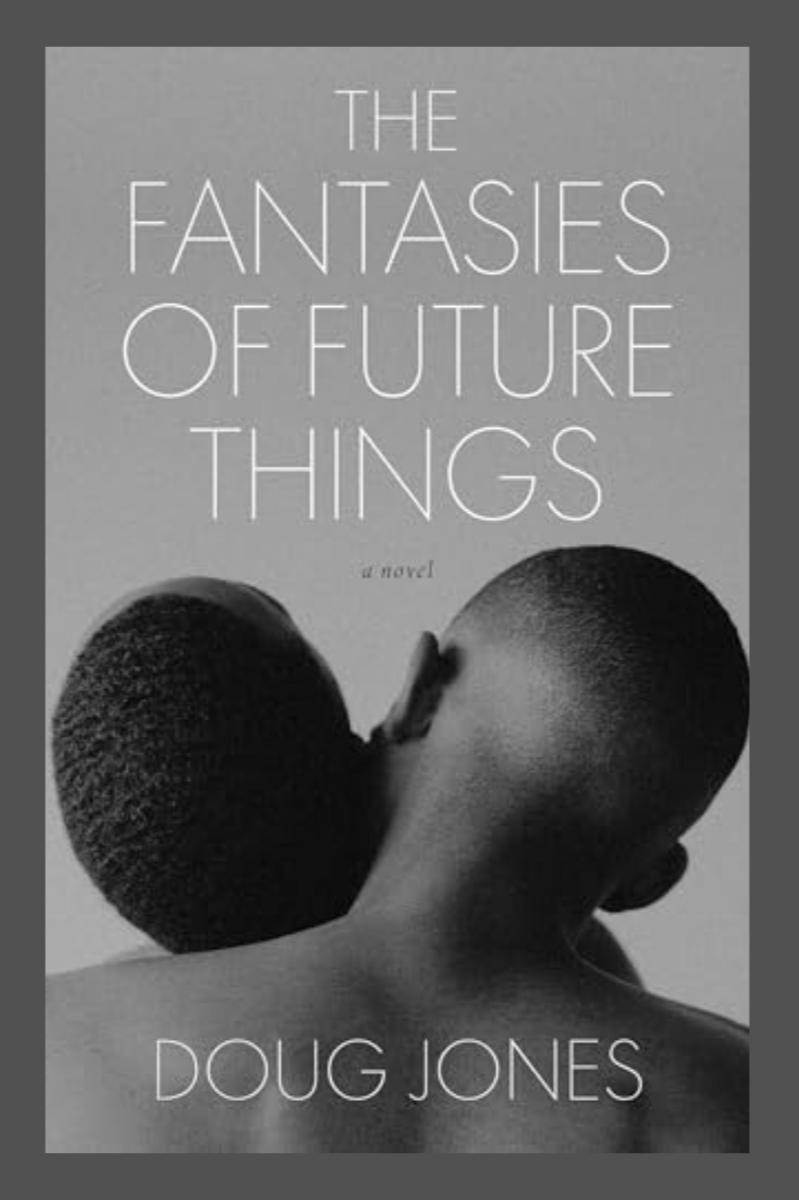
The Fantasies of Future Things – Doug Jones
I judged this book by its cover.
Based on the title, the description and cover art, I went in expecting a queer love story set against the backdrop of Atlanta's Olympic transformation. That's not what "The Fantasies of Future Things" is, and some of my ambivalence about it is inseparable from that misalignment.
What Doug Jones is actually writing is a city-at-a-crossroads novel — a story about gentrification, racial identity and moral compromise, using the 1996 Atlanta Olympics as a litmus test for Black progress. It centers around two Black gay men, Jacob and Daniel, who work for the real estate development company tasked with revitalizing Summerhill, a predominantly Black neighborhood, which is to say they are being paid to displace their own community.
The political and historical layers Jones builds around that premise are genuinely interesting, and more ambitious than I expected from a debut. Atlanta in this novel is a character itself, not merely a backdrop.
The problem is that Jacob and Daniel, despite sharing a workplace and alternating POVs, rarely feel like they inhabit the same story. Jacob is the more immediately compelling character — a recent Morehouse graduate navigating his sexuality, his parents' expectations and his growing discomfort with the work he's doing. His coming out chapter is understated in a way that feels true, and his relationship with Sherman, the social worker who calls him out for racial complicity, is the novel's best thread.
Daniel's storyline takes longer to cohere, and when it does, the connection between the two men still feels forced. His early chapters are consumed by his mother's abuse, her death and the resentment she carried toward him — a resentment rooted in secrets about his father that took most of the novel to surface. Much of his interiority is delivered through his brother Marty, whose running commentary on Atlanta's racial history adds necessary context but keeps Daniel at a remove from the reader.
When he finally clicks into the broader narrative — making a pass at Jacob after their drive through the displaced neighborhood, then retreating into anonymous sex in the woods — the loneliness of his situation becomes clearer, but it also arrives too late. The payoff feels proportionally smaller than the setup deserved. The reveal that Daniel's father is Ralph, the Black developer who ultimately takes over the project, is the kind of discovery that should feel like more than an afterthought.
Jones has a lot on his mind — race, sexuality, family, gentrification, the particular loneliness of Black gay men navigating a world who, in the '90s, had few positive models for what their lives could look like. These are rich subjects, and he handles most of them with care. Still, some threads feel underdeveloped, the pacing is uneven and there are stretches where the political commentary crowds out the characters.
What kept me going was the city itself. Jones clearly loves Atlanta and knows it deeply, and the specificity of Summerhill — its history, its people, its precarious position between preservation and erasure — was fascinating. The final section, when the pieces finally click into alignment and we understand how Jacob and Daniel fully connect, made the journey feel mostly worthwhile.
The audiobook features strong work from both narrators. Ron Butler as Jacob felt fully inhabited — believable across the emotional range the character requires. Aaron Goodson as Daniel had less to work with, much of his character's interiority delivered through his brother Marty's dialogue, but he handled it with the right amount of restraint.
I would read Jones again. This felt like a writer with more to say than one novel could hold.
Rating (story): 3/5 stars
Rating (narration): 3.5/5 stars
Format: Audiobook (library loan)
Dates read: April 12 – April 14, 2026
Multi-tasking: Good to go. The first half moves slow enough that background listening won't cost you much, but the second half rewards closer attention.