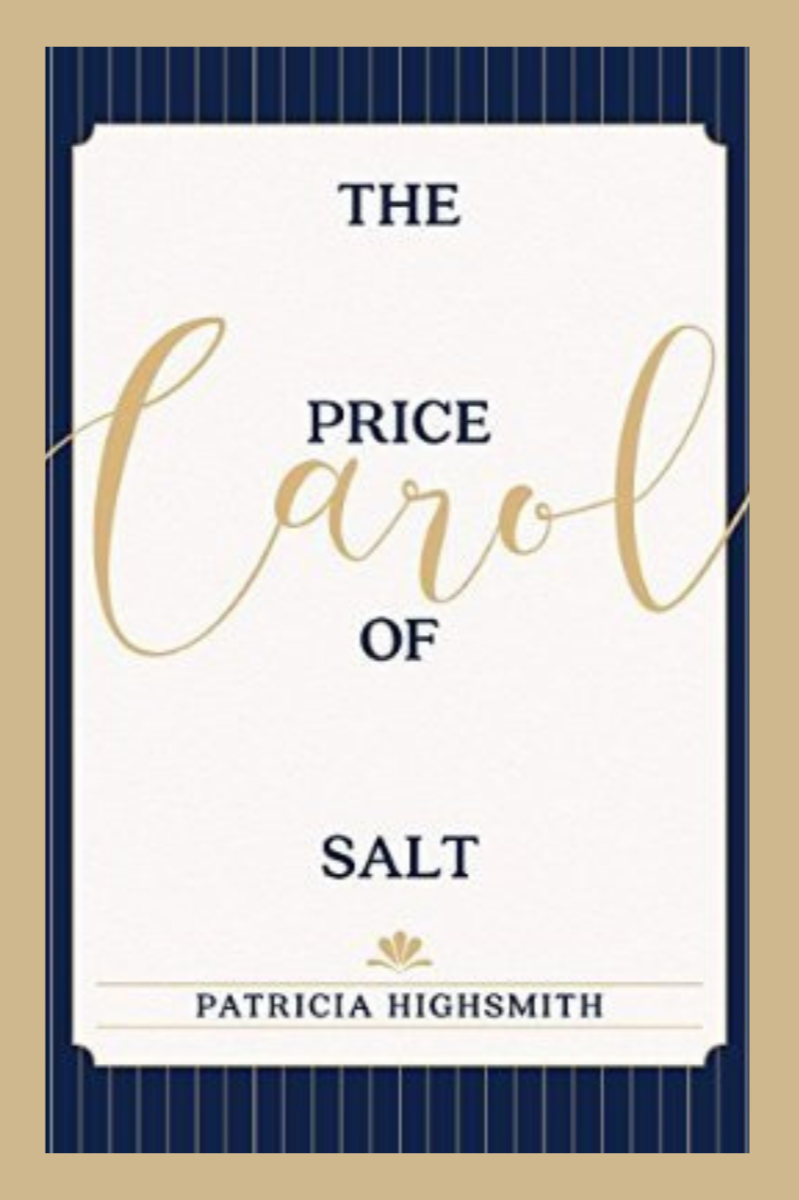
The Price of Salt (or Carol) – Patricia Highsmith
There is a particular kind of disappointment reserved for books you wanted to love but that end up disappointing you. "The Price of Salt" is one of those books.
Published in 1952 under the Claire Morgan pseudonym, written by a celebrated writer who hid her identity to tell a truth about herself the world wasn't ready for. What Patricia Highsmith achieved here is undeniable. At a time when lesbian fiction was either invisible or obligated to punish its protagonists, she wrote a love story that refused both options — one that ends, however tentatively, in something resembling happiness.
That was radical, and the novel's endurance is inseparable from that. However, historical significance and readerly pleasure are different things, and "The Price of Salt" reminded me that they don't always overlap.
The novel's central problem is Carol herself. We experience her almost entirely through Therese's besotted gaze, and while that perspective is honest for a 19-year-old in the grip of her first real desire, it leaves the relationship one-sided. Without access to Carol's interior life, it's nearly impossible to believe in the love story as anything more than an infatuation for her.
The one crack in her composure — a letter Carol writes near the novel's end, laying out her fears and regrets with a candor and depth that had been almost entirely absent — showed what this really could've been. It was the richest writing in the book, and it made me wonder what "The Price of Salt" might have been as an epistolary novel, where that POV could have been built from the beginning.
Highsmith is meticulous at constructing atmosphere — the cigarettes, the menus and the specific culture of Bohemian 1950s New York — but her dialogue is clunky, and her pacing is punishing. The novel feels twice its actual length.
I came to it having already seen Todd Haynes' film adaptation, which means I spent the entire audiobook with Cate Blanchett and Rooney Mara delivering prose that seemed out of place.That's not entirely fair to Highsmith, but it's honest — and it raises a genuine question about whether the film, which took considerable liberties, didn't actually improve on its source material.
The last third finds its footing as the stakes finally clarify, but I was already checked out by that point. I felt similarly reading Edmund White's "A Boy's Own Story" — another novel I respected in theory but not practice. Sometimes the books that broke ground do so by bearing the weight of what they had to survive to exist, and that weight shows.
None of this diminishes what Highsmith did, so the classic designation should still stand. She wrote a story that gave lesbian readers during the Lavender Scare something they had almost never been offered: the possibility of a life that didn't end in punishment or erasure. That will always matter, but I can still admit that I won't be recommending this one.
A note on the audiobook: Cassandra Campbell is not typically a narrator I gravitate toward — her male characters tend to blur together into the same over-performed register — but her portrayal of Therese's inner conflict was more nuanced than I expected. I do wonder, though, whether some of Carol's perceived coldness was a performance choice rather than something inherent to the text.
Rating (story): 2.5/5 stars
Rating (narration): 2/5 stars
Format: Audiobook (library loan)
Dates read: April 3 – April 8, 2026
Multi-tasking: Okay. The pacing is deliberate enough that background listening won't cost you much, but you will zone out frequently if trying to do too many other things.