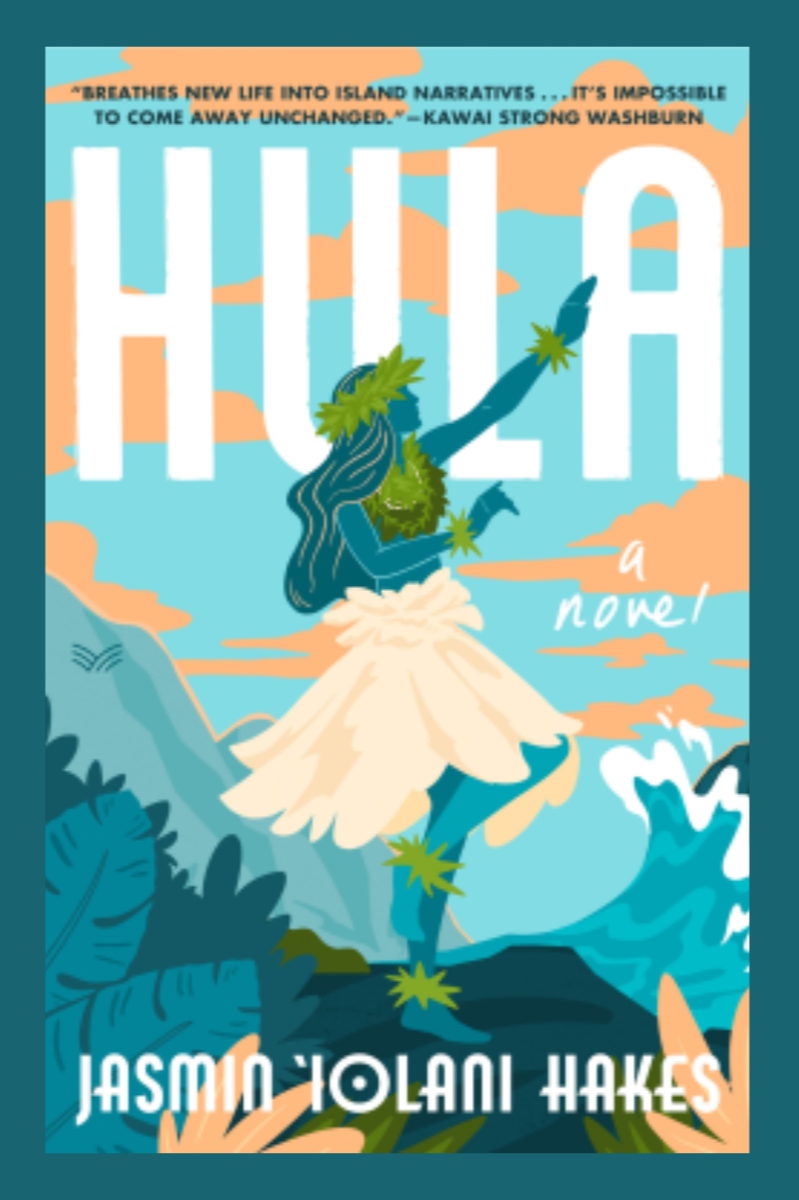
Hula – Jasmin Iolani Hakes
I read this while in Honolulu, which felt appropriate — and at times almost confrontational — given how directly this novel addresses the tension between tourism and lived experience in Hawai‘i.
At its core, “Hula” is an intergenerational family drama centered on three women: Hi‘i, her mother Laka and her grandmother Hulali. But it’s also a novel about the damage colonization inflicts inside families and communities.
Hi‘i grows up looking white but carrying Hawaiian ancestry, desperate to prove she belongs: to her culture, to her family and to the legacy of hula that defines them. The harder she tries to root herself, the more her life unravels. Her storyline hits familiar coming-of-age beats — estrangement, secrets, friendship, identity, etc. — but the indigenous context adds a texture most family sagas can’t match.
Laka’s storyline, largely set in the 1960s, traces the early cracks in the Naupaka dynasty. She wins Miss Aloha Hula, rebels against her mother’s rigid blood-quantum expectations, flees to Maui and ultimately makes a decision that permanently alters the family.
Hulali, meanwhile, is both guardian and enforcer — determined to protect land and legacy, even if it means sacrificing intimacy with her own daughter and grandchildren. Watching her slowly realize the cost of that rigidity was one of the more affecting parts of the book.
What elevates this novel is how Jasmin Iolani Hakes weaves these personal conflicts with Hawai‘i’s political history. The collective “We” voice of Hilo narrates the broader cultural and social shifts, including the 1993 Apology Resolution acknowledging the illegal overthrow of the Kingdom of Hawai‘i — a gesture heavy on symbolism and light on restitution. Those sections are angry and incredibly effective.
The discussion of blood quantum laws — and the paradox they create — is especially powerful. Hakes, who herself is hapa and often perceived as white, clearly channels something deeply personal here. The novel pushes back against rigid definitions of authenticity and exposes how colonial systems fracture families from the inside out. In that sense, the discomfort some readers have expressed about the author’s heritage almost proves the book’s point.
The hula history and descriptions are immersive and beautifully rendered. It made me slightly ashamed that I’ve never taken the time to understand the history or meaning behind the tradition. This isn’t a light or frothy story, but it’s surprisingly readable given its scope. There’s a subtle bite in the way Hakes critiques policy and colonial bureaucracy that keeps the heavier sections from dragging down the plot.
The audiobook, narrated by Mapuana Makia, is excellent. The Hawaiian language, place name and pidgin are woven throughout, and without a physical copy I occasionally struggled to keep track, similar to my experience with “The Buffalo Hunter Hunter.” But Makia’s performance grounds you in the rhythms of the culture in a way text alone likely couldn’t.
If I have a critique, it’s that the final 15% felt slightly rushed and tidier than the novel had earned. After such a layered, messy exploration of identity and belonging, the resolution comes together a bit too cleanly.
Still, this surprised me in the best way. It’s an intergenerational family saga, yes — and that structure is familiar — but Hakes integrates real historical and political texture more convincingly than many sprawling historical fiction attempts. It left me more emotional than I expected, and I would absolutely read Hakes again.
This would be a strong pick for AAPI or Native American Heritage Month, but more than that, it’s a novel that asks an uncomfortable question: Who gets to decide who belongs?
Thanks to Libro.fm, HarperVia, and the author for the advance copy in exchange for an honest review.
Rating (story): 4/5 stars
Rating (narration): 5/5 stars
Format: Audiobook (personal library)
Dates read: February 11 – February 16, 2026
Multi-tasking: Okay. You definitely need to pay close attention for about the first 50% as the timelines shift and many characters and plot points are introduced. After that, you can handle light activities like walking or yardwork.