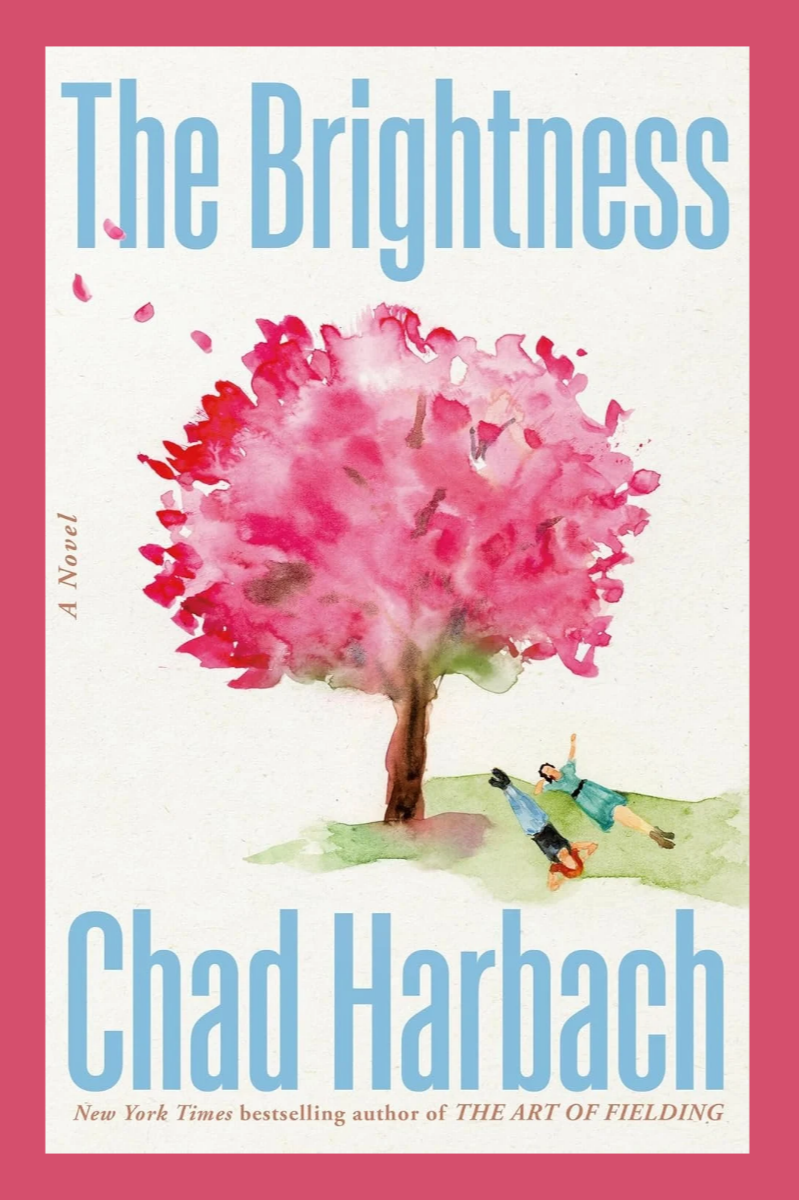
The Brightness – Chad Harbach
The literary gods have been unusually generous this year, with two authors finally delivering long-awaited follow-ups to their blockbuster debuts. First came Kathryn Stockett's excellent "The Calamity Club," and now Chad Harbach has returned to Westish College with "The Brightness," a sequel to "The Art of Fielding," one of my favorite reads of 2022.
Unfortunately, this second reunion has me wondering whether Harbach was a one-hit wonder.
What made "The Art of Fielding" so memorable was the author’s extraordinary understanding of human nature. His characters were complicated, emotionally mature and wonderfully observed, with an interiority that made even their questionable decisions understandable. I was genuinely excited to revisit them, although unlike my friend Gail, who reread the entire novel in preparation, I settled for revisiting my original review.
As it turns out, I might have been better off leaving Westish in the past.
Set several years after the original, "The Brightness" shifts its attention primarily to Pella Affenlight and her younger friend Irma. Pella, now in her late twenties, is engaged to Mike Schwartz but increasingly restless with their life at Westish. Irma, meanwhile, becomes involved in a politically charged campus prank that spirals into a national controversy. Their stories unfold around two major events: the prank and Owen Dunne's wedding, before following Pella to New York City as she attempts to reinvent herself.
There's plenty of material here, but Harbach seems more interested in having his characters talk about their lives than in exploring what makes them tick. The dialogue is frequently clunky, the humor occasionally juvenile, and nearly everyone appears to be experiencing some form of emotional regression. It's particularly baffling given how worldly these same characters were in the first novel.
Pella is perhaps the clearest example. Her relationship with Mike is on life support, and Harbach does a convincing job portraying two people who have grown apart rather than together. Mike's loyalty is both his greatest strength and his biggest limitation, and the author once again makes what could have been a stereotypical aging jock into someone genuinely sympathetic.
But Pella's subsequent choices are harder to understand. After leaving Mike because their ambitions no longer align, she becomes involved with Nicholas, a wealthy, enigmatic man whose emotional unavailability and disrespect seem to matter less than his sophistication, mother and sex appeal. By the end, she's pregnant with his child and apparently content with an arrangement that seems no healthier than the one she escaped.
I don't need Pella to make good decisions, but I do need to understand why she's making them. That’s a topic Harbach skirts around but never fully analyzes outside of brief mentions of her early marriage and mother’s and father’s deaths.
I also question the decision to center so much of the novel on Pella and Irma. Harbach offers occasional insights into gender and ambition, including an enlightened comparison between how society discards aging athletes and women, but his attempts to explore female sexuality and the female body are frequently awkward. The extended attention to anatomy, bodily functions and sexual discovery sometimes feels adolescent.
Irma's storyline is equally frustrating, although for different reasons. Set in 2015, her involvement in a scheme to tattoo male athletes with the words "I Was Raped" provides an opportunity to explore sexual assault, privilege and the growing rejection of the "boys will be boys" mentality in the years before #MeToo. Instead, the prank feels like a moralizing Ice Bucket Challenge, with the women behind it insufficiently developed to support the commentary Harbach seems to be attempting.
Dahlia, in particular, feels more like a plot device than a fully realized character. Her trauma, mental illness and motivations receive surprisingly little depth, which makes her [spoiler alert] eventual suicide and final post identifying her rapist all the more frustrating. That revelation is genuinely harrowing, and the subsequent gathering in Evanston delivers one of the novel's few gut punches. [spoiler ended] But it also crystallizes ideas Harbach has been circling for hundreds of pages. Why did it take so long?
Which brings me to the length. Nearly 700-pages, with remarkably little plot and much of the first 60 percent devoted to essentially two events. There are stretches of dialogue, sexual encounters and interpersonal drama that neither advance the story nor deepen our understanding of the characters. I enjoyed occasional sections while listening, but rarely felt compelled to return.
The wedding offered some of the better moments, particularly when Pella and Owen reconnect. Their easy rapport briefly recaptures the magic of "The Art of Fielding," and Owen remains one of the few characters whose pretensions Harbach balances well – he was the only character in this novel who felt like they had moved on and matured in the years since we last saw him.
There's also an interesting metafictional element: Owen has written a novel called "The Art of Fielding," which we're led to believe is essentially the book we've already read. I appreciated the conceit until the ending revealed that Irma was writing her own account of the events of "The Brightness," effectively becoming the next Owen. Rather than a necessary continuation, the whole enterprise begins to resemble a “requel.”
Perhaps I'm being too hard on an author who took so long to produce a follow-up. But Harbach chose to revisit the very characters and setting that made his debut so successful, inviting comparisons that ultimately do this novel no favors. Had he written something entirely new, I might have been more forgiving.
Helen Laser, usually a reliable narrator for me, delivers a solid performance, although I found the audiobook somewhat uninspiring. I suspect that's more the material than her narration.
Thanks to Libro.fm, Hachette Audio and the author for an advanced listener copy in exchange for my honest review.
Rating (story): 2.75/5 stars
Rating (narration): 3.5/5 stars
Format: Audiobook (personal library)
Dates read: October 7 – October 14, 2026
Multi-tasking: Okay. The novel is dialogue-heavy and generally easy to follow, although the shifting relationships and occasional important revelations benefit from closer attention.