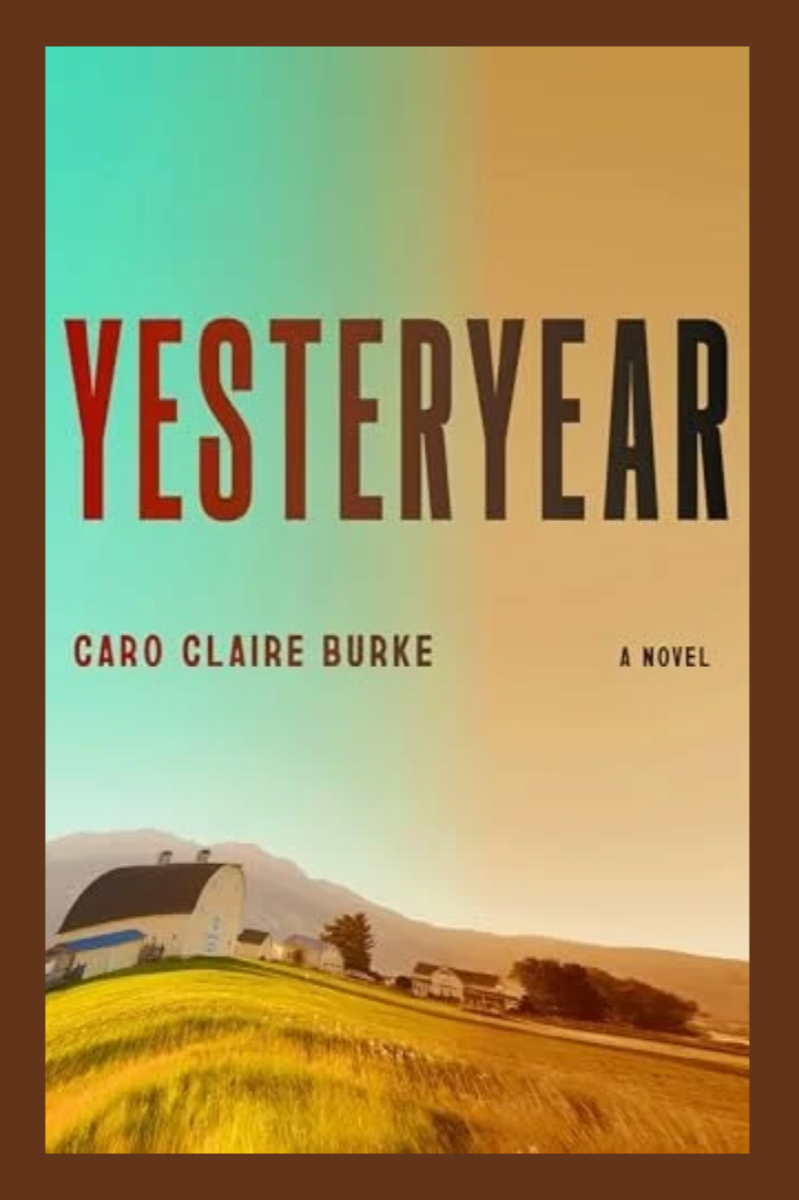
Yesteryear – Caro Claire Burke
Art is subjective. Politics is personal. When a novel takes aim at the intersection of the two, it's probably not going to be universally loved, so Caro Claire Burke's "Yesteryear" might be the most talked-about and divisive novel of the year.
After spending six months on a library waiting list, I deliberately avoided reviews, interviews and commentary so I could form my own opinion. I'm glad I did, because beneath all the discourse is an impressive debut that captures something deeply uncomfortable about American culture right now.
At the center is Natalie, a successful lifestyle influencer who has built an empire selling an idealized version of traditional American family life. She's wealthy, religious and seemingly devoted to her husband and children, with a picturesque ranch and an online presence designed to make millions of followers envious. She's also manipulative, calculating, deeply hypocritical and one of the more complicated characters I've encountered this year.
And I think I know her.
Living in a red state, I've encountered women who are intelligent, ambitious and perfectly capable of running the show but who have nevertheless been encouraged to define themselves primarily as wives, mothers and supporters of their husbands. Sometimes those husbands are loving and capable partners. Other times, they're Caleb, Natalie's spectacularly incompetent husband, whose privilege has insulated him from ever having to accomplish much of anything.
Natalie is ostensibly antifeminist, yet she's the one making the money, managing the business, solving the problems and compensating for her husband's shortcomings. She advocates for a world in which men lead and women follow, even as her own life demonstrates how absurd that arrangement can be. Burke exploits that contradiction brilliantly, refusing to make Natalie either a straightforward villain or a sympathetic victim.
Do I feel sorry for her? Yes. Do I think she deserves much of what happens to her? Also yes. Would I want to be her friend? Absolutely not.
One of my favorite scenes comes when Natalie attends a virtual class about growing her social media following and discovers that everyone looks and sounds exactly like her: blonde, religious and selling some variation of the same homesteading fantasy. It's a wonderfully revealing moment for a woman whose entire business depends on convincing people that her carefully manufactured life is authentic. Burke is especially good at exposing the machinery behind that fantasy.
Yet the novel is interested in more than hypocrisy. It also asks uncomfortable questions about how we treat people whose beliefs we find objectionable. Natalie can be cruel, but she's also surrounded by people who dismiss, exploit and underestimate her, including those who consider themselves more enlightened and compassionate.
I found that particularly challenging because I recognize the instinct. When something as simple as a red hat can make me reconsider whether I want to strike up a conversation with someone, it's worth asking where legitimate criticism of an ideology ends and contempt for the individual begins. That doesn't mean harmful beliefs should go unchallenged, but it's a difficult mirror for those of us who consider ourselves well-meaning liberals. Still, recognizing the ways a woman has been constrained by patriarchy doesn't necessarily excuse the harm she inflicts on others.
Structurally, "Yesteryear" is more ambitious than I expected. Moving between different periods of Natalie's life, Burke gradually reveals how she became the woman we meet. Although the premise initially suggests science fiction, this is ultimately more of a domestic thriller, and I was genuinely surprised by the major revelation. Each new piece of Natalie's history complicates our understanding of her rather than simply explaining away her behavior.
Not everything works. The political storyline is probably the weakest element, some developments surrounding the collapse of Natalie's empire feel convenient, and her relationships with her mother and sister deserved more attention. Burke also rarely settles for subtlety when she can turn the dial up to eleven. The characters are almost universally unlikable, and I can understand why some readers find the experience exhausting.
Still, this book has bite, and much of it lands exactly where it should.
Since finishing, I've read criticisms about the treatment of mental illness, the portrayal of traditional families, the hostility toward religion and feminism, and Natalie's motivations. Some have merit, while others seem rooted in a desire for the novel to take a clearer moral position. Natalie is both exploited and exploitative, constrained by expectations she enthusiastically promotes, and capable of recognizing injustice while perpetuating it herself. She doesn't give readers the comfort of an obvious person to root for or against.
I also found myself thinking about Josh Silver's "Fruit Fly," another recent novel featuring an ambitious, deeply flawed woman whose professional success depends on manipulation and exploitation. Mallory and Natalie have more in common than their respective receptions might suggest, and I wonder how much of the difference comes down to the identities and cultural associations attached to each character rather than their actual behavior.
There's another uncomfortable possibility worth considering: that I found "Yesteryear" easier to enjoy because, as a man, I'm not subjected to many of the same expectations Burke is criticizing. What I experience as sharp social commentary might feel considerably less entertaining to a woman who has spent her life navigating those pressures. That doesn't invalidate either reaction, but it might help explain why the novel provokes such wildly different responses.
As for the ending, I thought its bleakness was entirely appropriate. Natalie and Caleb's relationship has always been built on a fantasy neither can sustain, and their eventual circumstances are both a punishment and a grotesque fulfillment of everything they claimed to want. There's something almost "Grey Gardens" about the arrangement, and I appreciated that Burke resisted the temptation to redeem Natalie.
For me, "Yesteryear" is a painfully recognizable portrait of an America increasingly willing to confuse popularity with expertise, nostalgia with virtue and personal conviction with universal truth. It's angry, exaggerated, ridiculous and not always successful, but it's also perceptive, entertaining and far more complicated than its premise suggests. I finished wanting to think about it, argue with it and understand why it provoked such strong reactions. That's a pretty good outcome for a novel seemingly determined to make everyone uncomfortable.
Rebecca Lowman, one of my favorite audiobook narrators, does a fine job bringing Natalie and her world to life. She kept me engaged throughout, and I'd absolutely recommend listening to this one.
Rating (story): 4.5/5 stars
Rating (narration): 4/5 stars
Format: Audiobook (library loan)
Dates read: September 28 – October 7, 2026
Multi-tasking: Okay. The shifting timelines and gradual revelations reward attention, but Lowman's engaging narration makes the story easy to follow while doing other things.